


A Market Moving Beyond Early-Stage Hype
The Philippines is increasingly viewed as one of Southeast Asia’s most interesting long-term startup markets. For years, investor attention in the region was concentrated on Singapore, Indonesia, and Vietnam. But the Philippine technology ecosystem is now benefiting from a mix of young consumers, high mobile adoption, expanding digital payments, and a growing pool of founders solving local infrastructure gaps.
This makes the country more than a short-term venture capital story. For investors willing to look beyond immediate exits, Philippine tech startups offer exposure to structural shifts in finance, commerce, logistics, health, education, and enterprise software.
One useful macro reference is the World Bank’s Philippines country overview, which tracks the country’s economic direction and development indicators: https://www.worldbank.org/en/country/philippines/overview. For startup investors, this matters because macro resilience, consumption trends, and digital inclusion often shape the long-term size of a technology market.
Fintech Remains the Strongest Entry Point
Fintech continues to be one of the most attractive sectors in the Philippines. The country has a large population of consumers and small businesses that have historically been underserved by traditional banking. Digital wallets, online lending, remittances, insurance technology, and merchant payment tools are filling real gaps in daily life.
The strongest fintech startups are not simply offering convenience. They are building financial rails for people who rely on cash, informal credit, or overseas remittances. This creates room for recurring usage, data-driven underwriting, and cross-selling into savings, insurance, and business finance.
For long-term investors, the key question is not whether fintech demand exists. It is whether a startup can manage regulation, credit risk, fraud prevention, and customer trust while scaling responsibly.
Real-World Context: Digital Behavior Has Changed Permanently
The pandemic accelerated digital adoption across the Philippines, but the shift did not disappear afterward. Consumers became more comfortable with mobile payments, online shopping, food delivery, remote work tools, and app-based services. At the same time, businesses had to digitize operations, marketing, payments, and supply chains.
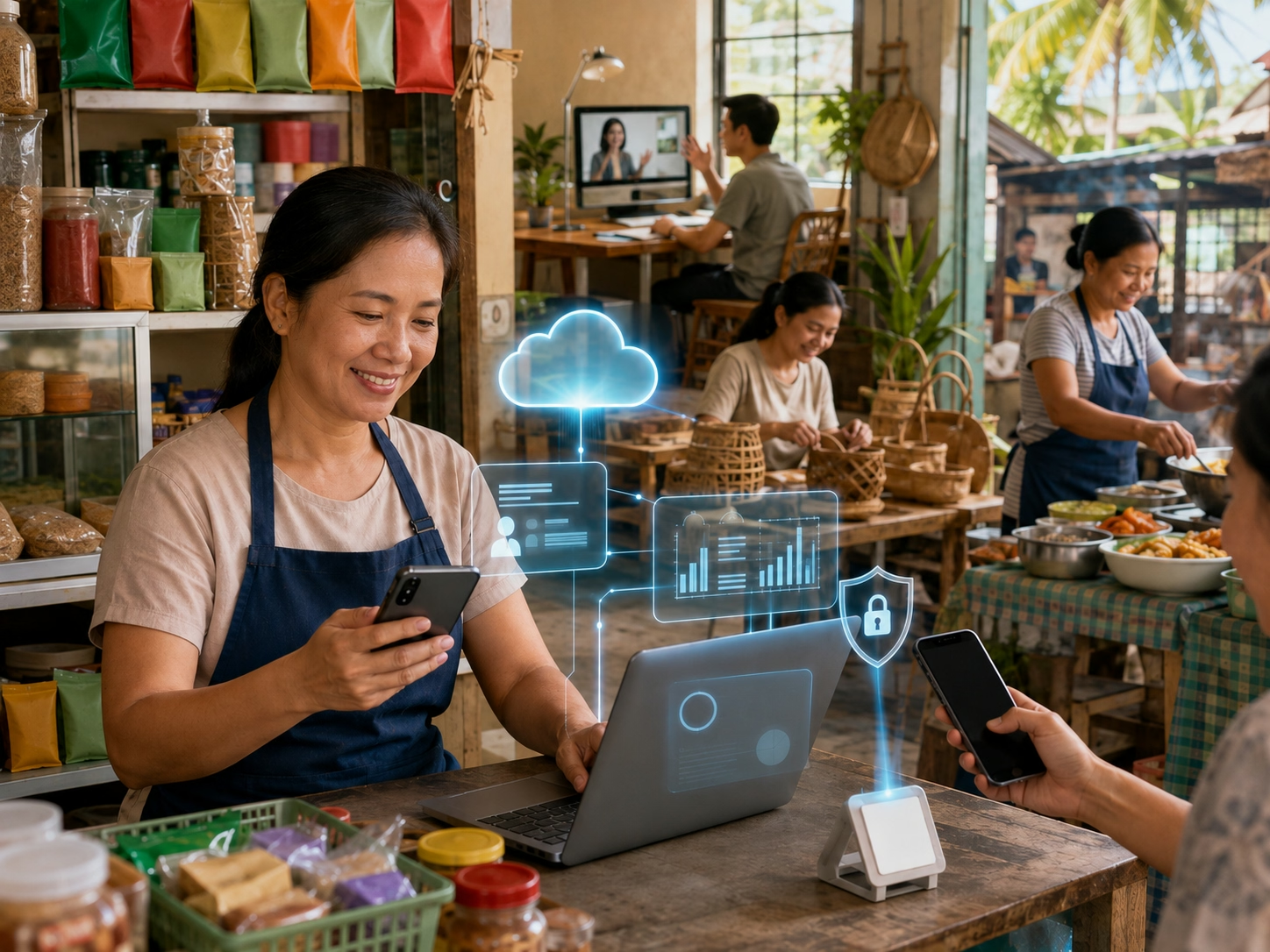
This change creates an important investment signal. Startups that help traditional businesses operate digitally may have more durable revenue than consumer apps dependent on promotional spending. Software for small merchants, logistics optimization, digital payroll, accounting tools, and customer engagement platforms could become increasingly valuable.
What Investors Should Evaluate Carefully
Not every startup in the Philippine tech ecosystem will become a major winner. Investors should assess unit economics, regulatory exposure, founder-market fit, and the startup’s ability to expand beyond Metro Manila. A company serving only affluent urban users may scale quickly at first but hit a ceiling. A platform that reaches provincial markets, overseas Filipino communities, or small businesses may have a broader growth path.
Capital efficiency is also critical. In a more disciplined funding environment, startups that grow through strong retention and practical monetization are likely to stand out over those relying on heavy subsidies.
The Long-Term Investment Case
The Philippines offers a compelling combination of demographic strength, digital adoption, and unresolved market inefficiencies. These are exactly the conditions that allow technology companies to create value over many years. While risks remain, especially around regulation, infrastructure, and funding cycles, the best Philippine startups are solving problems that are deeply embedded in the economy.
For investors seeking Southeast Asian exposure beyond the most crowded markets, Philippine tech startups deserve close attention. The opportunity is not just about backing the next app. It is about investing in the digital systems that could support the country’s next phase of economic growth.











Leave a Reply