

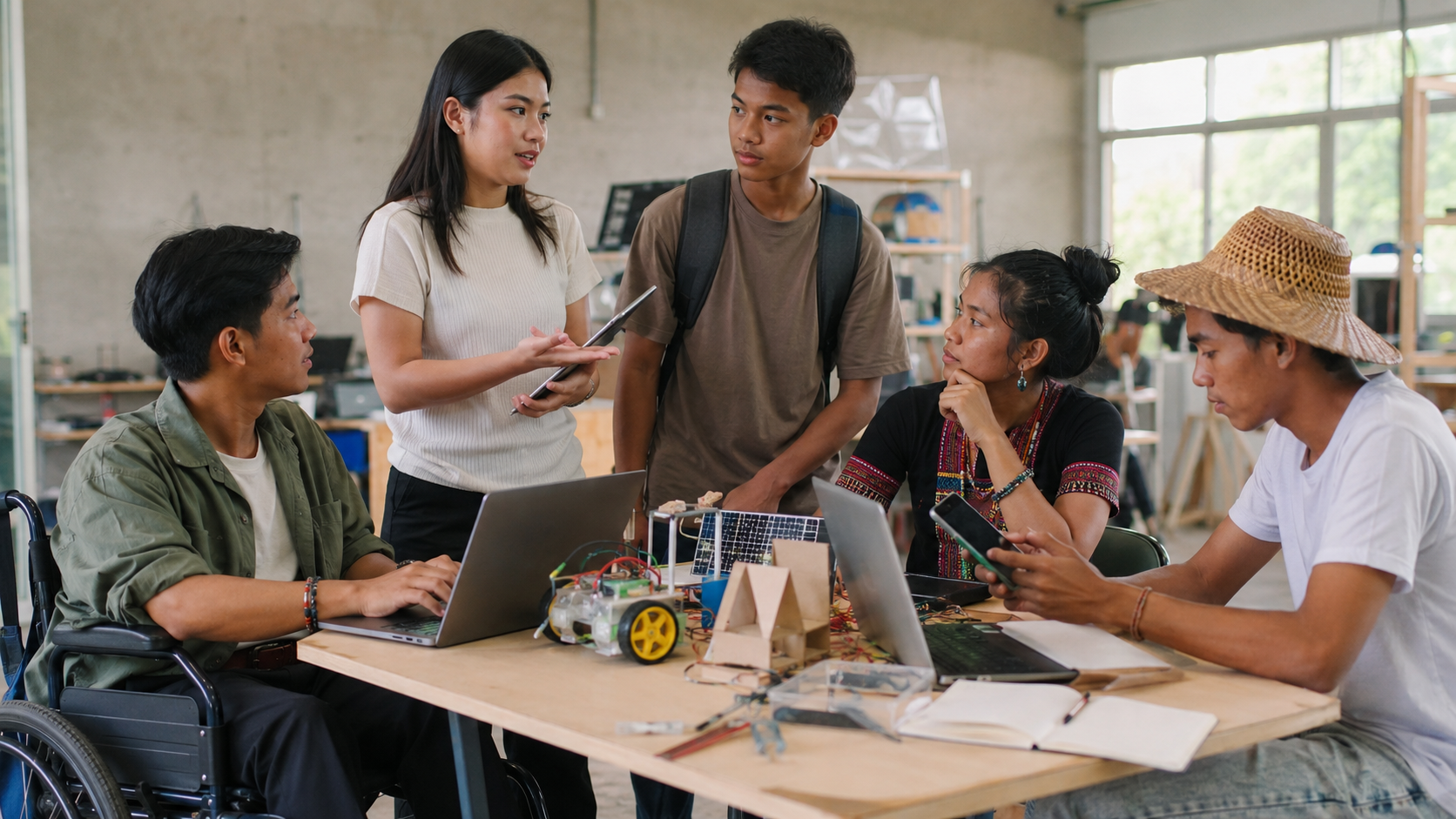
The growth of the Philippine startup ecosystem is increasingly connected to what happens inside classrooms, laboratories, university incubators, and digital training centers. While access to capital remains important, many of the country’s emerging entrepreneurs first develop their business ideas through technology education.
Programming, data analysis, product design, digital marketing, cybersecurity, and financial technology are no longer viewed only as employment skills. For a growing number of Filipino students, these capabilities have become tools for creating companies that address local problems.
From Technical Skills to Commercial Ideas
Technology education can change how students identify opportunities. A software development class, for example, may teach learners how to build an application. Entrepreneurship training can then help them determine whether the application solves a genuine customer problem.
This combination is particularly relevant in the Philippines, where communities continue to face challenges involving transportation, financial inclusion, healthcare access, agricultural productivity, and disaster preparedness.
Instead of treating these difficulties only as social problems, technology-trained entrepreneurs may see them as opportunities to develop scalable services. A student who understands cloud computing could design a digital record system for rural clinics. An engineering graduate might build affordable sensors for farmers, while a marketing student with analytics training could create an e-commerce platform for provincial producers.
Universities Are Becoming Startup Launching Grounds
Philippine universities are gradually expanding beyond conventional lectures by establishing technology business incubators, innovation laboratories, hackathons, and industry mentorship programs.
These initiatives allow students to test products before establishing formal companies. They can interview potential customers, create prototypes, calculate operating costs, and receive advice from experienced founders.
Incubators also reduce the isolation often experienced by first-time entrepreneurs. Students gain access to multidisciplinary teams that may include developers, designers, researchers, and business strategists. This is important because successful startups rarely depend on technical knowledge alone.
A technically advanced product can still fail when founders misunderstand pricing, regulation, market demand, or customer behavior. For this reason, the most effective programs connect engineering and computer science education with accounting, communication, business law, and market research.
Government Policy Strengthens the Education-to-Startup Pipeline
The Philippine government formally recognized the importance of startup development through Republic Act No. 11337, known as the Innovative Startup Act. The legislation provides a framework for startup grants, support programs, research collaboration, and other forms of assistance.
The complete law is available through the Official Gazette of the Republic of the Philippines.
The law matters to technology education because it encourages cooperation among government agencies, academic institutions, investors, and private companies. Students who once viewed entrepreneurship as an uncertain career may now encounter more structured pathways for turning research projects into commercial ventures.
A Realistic Challenge for Future Founders
Technology education will not automatically produce successful companies. Some students graduate with strong programming skills but limited understanding of customer acquisition, cash flow, or intellectual property. Others build products based on classroom assumptions without conducting field research.
Educational institutions must therefore measure success through more than the number of workshops conducted. They should evaluate whether students have created usable prototypes, interviewed customers, secured pilot partners, or generated sustainable revenue.
Building Founders Who Understand Local Problems
The Philippines does not need startup founders who simply copy business models from larger technology markets. It needs entrepreneurs who understand the realities of island communities, informal businesses, congested cities, overseas workers, and small agricultural producers.
Technology education can provide the foundation, but its greatest value appears when technical knowledge is combined with empathy, commercial discipline, and a detailed understanding of Filipino consumers.









Leave a Reply