

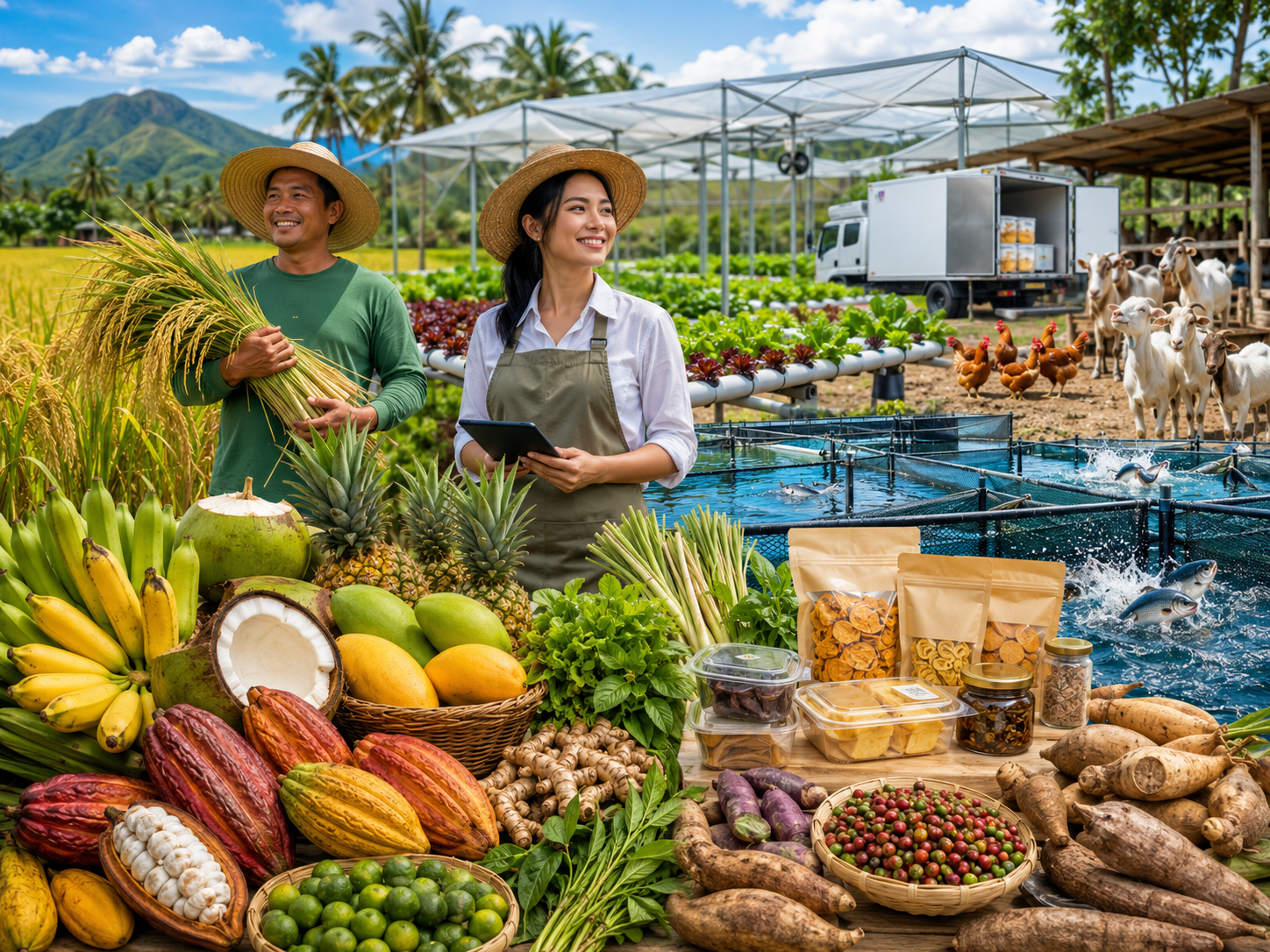
Agribusiness remains one of the most promising sectors for Filipino entrepreneurs because agriculture is deeply connected to food security, employment, rural development, and consumer demand. The Philippines has fertile land, a tropical climate, rich marine resources, and a large domestic market that continues to need rice, vegetables, fruits, meat, fish, and processed food. For business-minded Filipinos, agribusiness is no longer limited to traditional farming. It now includes technology, processing, logistics, branding, e-commerce, and export-oriented ventures.
One strong opportunity is high-value crop production. Filipino entrepreneurs can invest in vegetables, herbs, fruits, cacao, coffee, coconut, and spices. Demand for healthier food and locally sourced ingredients is increasing, especially among urban consumers, restaurants, hotels, and food manufacturers. Crops such as lettuce, tomatoes, chili, mushrooms, dragon fruit, calamansi, cacao, and specialty coffee can generate higher profit margins than ordinary staple crops when managed properly. Entrepreneurs can also explore greenhouse farming, hydroponics, and vertical farming, especially in areas near Metro Manila, Cebu, Davao, and other growing cities.
Another profitable area is food processing. Many Filipino agricultural products lose value because they are sold raw and are vulnerable to spoilage. By processing crops into dried fruit, jams, sauces, coconut products, cacao tablea, coffee blends, banana chips, pickles, frozen vegetables, or ready-to-cook meals, entrepreneurs can extend shelf life and increase market value. Processed products also have better potential for branding, supermarket placement, online selling, and export. For example, coconut can be turned into virgin coconut oil, coconut sugar, coconut flour, and coconut snacks, all of which serve different consumer markets.
Livestock and poultry businesses also offer opportunities, especially when supported by proper biosecurity, feed management, and market planning. Demand for pork, chicken, eggs, dairy, and processed meat remains strong in the Philippines. Entrepreneurs can enter the sector through broiler production, egg farming, goat raising, native chicken production, or small-scale dairy ventures. However, success requires knowledge of animal health, disease prevention, cost control, and reliable buyers.
Aquaculture is another major agribusiness opportunity. Since the Philippines is an archipelagic country, fish and seafood are central to Filipino diets. Entrepreneurs may consider tilapia, bangus, shrimp, crab, seaweed, or ornamental fish production. Seaweed farming, in particular, has potential because it supports food, cosmetics, pharmaceuticals, and industrial products. Aquaculture businesses can become more competitive by adopting better water quality management, sustainable feeds, and cold-chain systems.
Agritech is also creating new possibilities. Filipino entrepreneurs can build or use digital tools for farm monitoring, weather updates, online marketplaces, farm financing, drone services, irrigation control, and supply-chain tracking. Many small farmers struggle with limited access to buyers, capital, and technical information. Businesses that solve these problems can earn income while improving rural productivity.
To succeed in agribusiness, entrepreneurs should focus on market demand before production. A common mistake is growing or producing something without confirmed buyers. It is better to study restaurants, groceries, institutional buyers, exporters, online consumers, and food processors first. Building partnerships with farmer cooperatives can also reduce supply problems and support community-based growth.
Agribusiness in the Philippines is full of opportunities, but it requires patience, technical knowledge, and strong management. Entrepreneurs who combine farming with processing, technology, branding, and distribution can create profitable ventures while helping strengthen the country’s food system.














Leave a Reply