

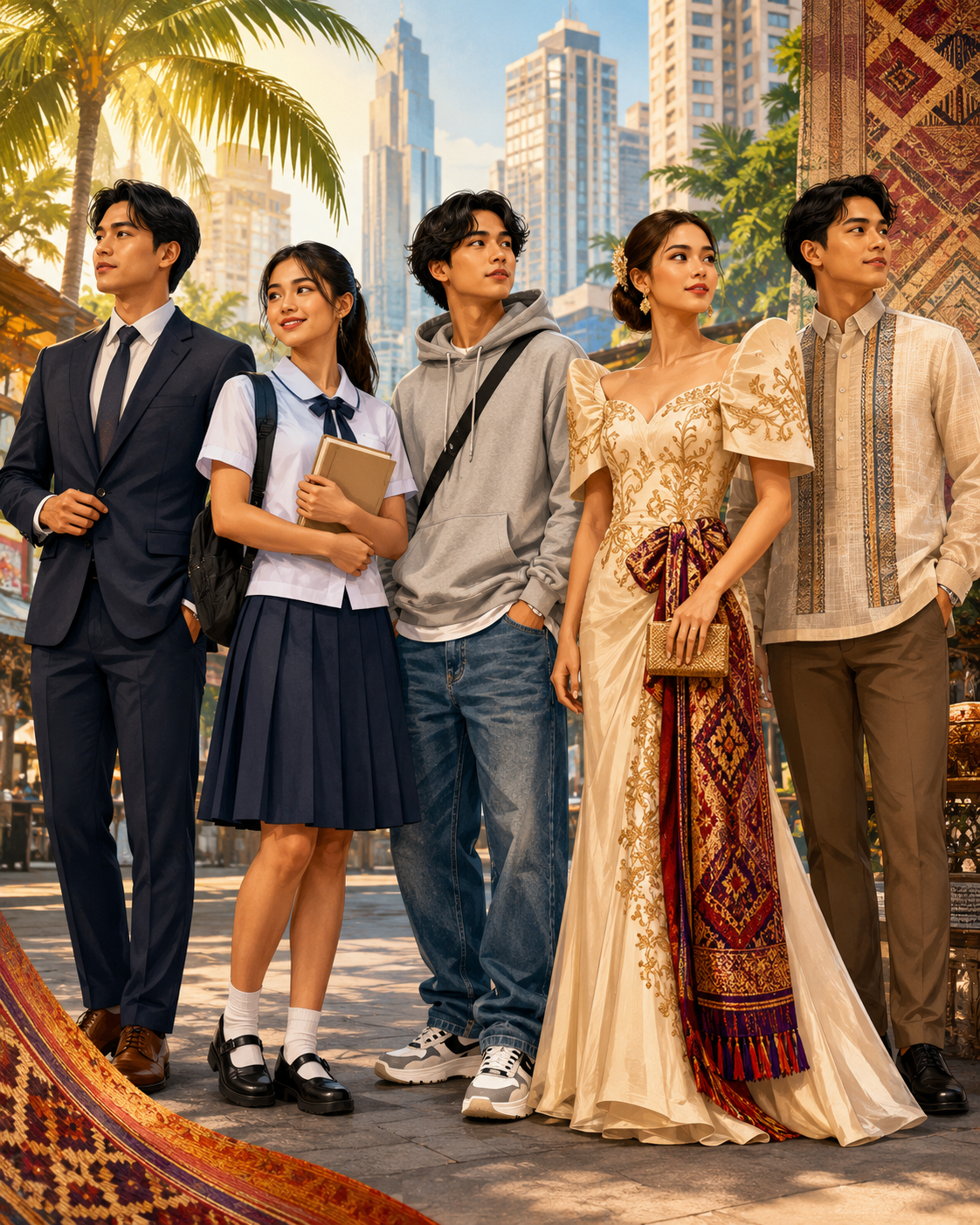
Western fashion has played a major role in shaping the clothing culture of the Philippines. The country’s fashion identity is the result of many historical layers, including indigenous traditions, Spanish colonial rule, American influence, global media, and modern consumer culture. Among these influences, Western fashion has been especially powerful because it changed not only what Filipinos wore, but also how they understood beauty, professionalism, modernity, and social status.
Before Western influence became dominant, clothing in the Philippines was closely connected to climate, community, and local materials. Indigenous Filipinos wore garments made from woven fibers such as abaca, cotton, and piña. Clothing was often loose, breathable, and suitable for a tropical environment. Designs also reflected social position, ethnic identity, and local craftsmanship. However, Spanish colonization introduced more structured garments, modest silhouettes, embroidery, and Catholic ideas of proper dress. This period helped develop iconic Filipino clothing such as the baro’t saya and later the terno.
The strongest Western impact came during the American colonial period in the early twentieth century. American-style education, newspapers, magazines, and cinema exposed Filipinos to new ways of dressing. Men began wearing suits, trousers, neckties, and leather shoes, especially in offices, schools, and government institutions. Women became familiar with Western dresses, skirts, blouses, hats, and later shorter hemlines. Western clothing became associated with education, urban life, and social advancement.
Hollywood also had a deep effect on Filipino fashion. Movie stars became style models, and Filipino consumers followed trends seen on screen. Hairstyles, evening gowns, casual wear, and makeup styles were influenced by American celebrities. As cinemas became popular in cities, Western glamour entered everyday imagination. Fashion was no longer only about practicality or tradition; it became a way to express personality and aspiration.
After World War II, Western fashion became even more visible through department stores, imported clothing, and ready-to-wear garments. Jeans, T-shirts, polo shirts, sneakers, and jackets became part of daily Filipino wardrobes. These items were practical, affordable, and easy to mix with local clothing. Denim, for example, became popular among young people because it represented comfort and freedom. Western casual wear gradually reduced the use of traditional clothing in everyday life.
Despite this strong influence, Filipino fashion did not simply copy Western styles. Local designers and wearers adapted Western trends to fit Filipino culture, body types, climate, and values. The barong Tagalog, for instance, remained important in formal events, but it was redesigned with modern cuts and materials. The terno also evolved from a traditional women’s garment into a symbol of national elegance, often seen in pageants, formal gatherings, and designer collections.
Today, Western fashion continues to influence the Philippines through social media, international brands, Korean-Western streetwear hybrids, and global fashion trends. However, many Filipino designers are now combining Western silhouettes with local textiles, indigenous patterns, and traditional techniques. This creates a fashion identity that is global but still distinctly Filipino.
The influence of Western fashion on the Philippines is therefore complex. It changed everyday clothing, professional dress, beauty standards, and consumer habits. At the same time, Filipino fashion remains creative and adaptive, transforming outside influences into styles that reflect local history, tropical living, and national identity.








Leave a Reply