

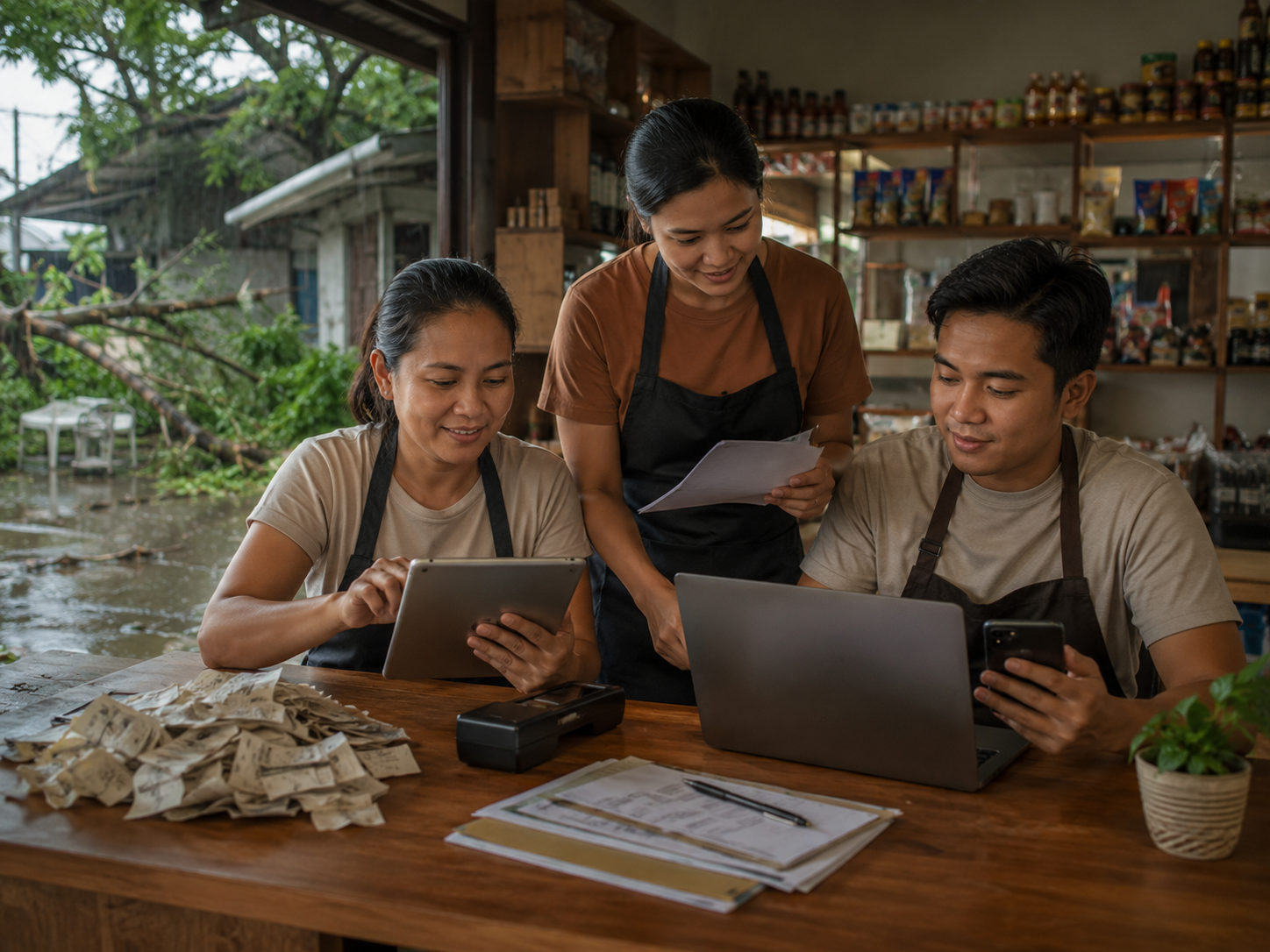
For many micro, small, and medium enterprises in the Philippines, operational complexity does not begin with expansion. It begins with the first handwritten order, the first inventory discrepancy, and the first customer payment that must be manually matched with a sale.
A neighborhood retailer may still record purchases in a notebook. A food business may receive orders through Facebook Messenger, Viber, text messages, and phone calls. A small distributor may maintain separate spreadsheets for sales, stock, and supplier payments.
Each process can work on its own. The problem emerges when the business grows and information becomes fragmented.
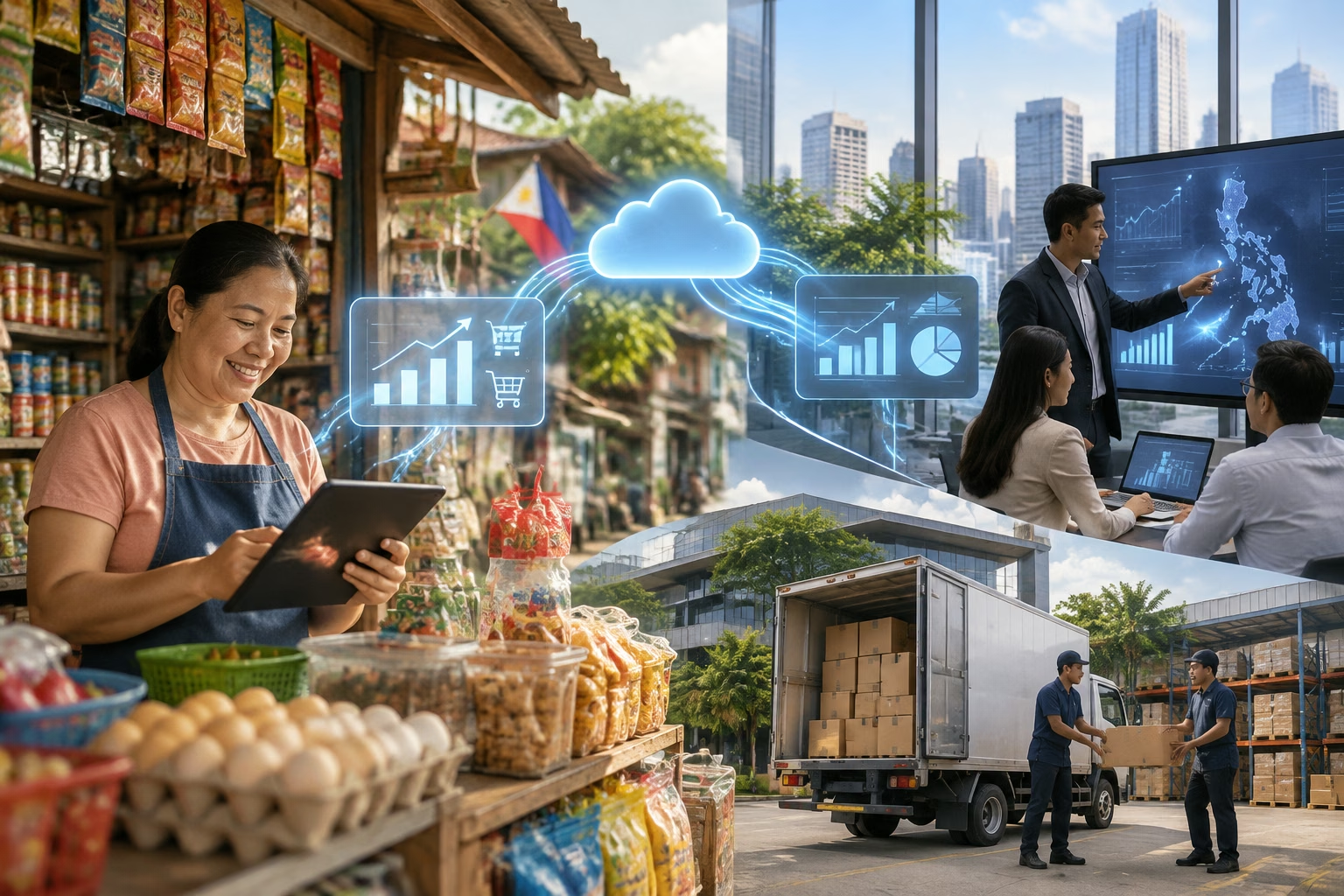
Digitalization is increasingly changing that reality. For Philippine MSMEs, the most important benefit is not simply having an online presence. It is the ability to connect routine business activities into a simpler operating system.
Moving from Separate Tasks to Connected Workflows
A common misconception is that digital transformation requires a sophisticated enterprise system. For most small businesses, the first meaningful improvement comes from solving one operational bottleneck.
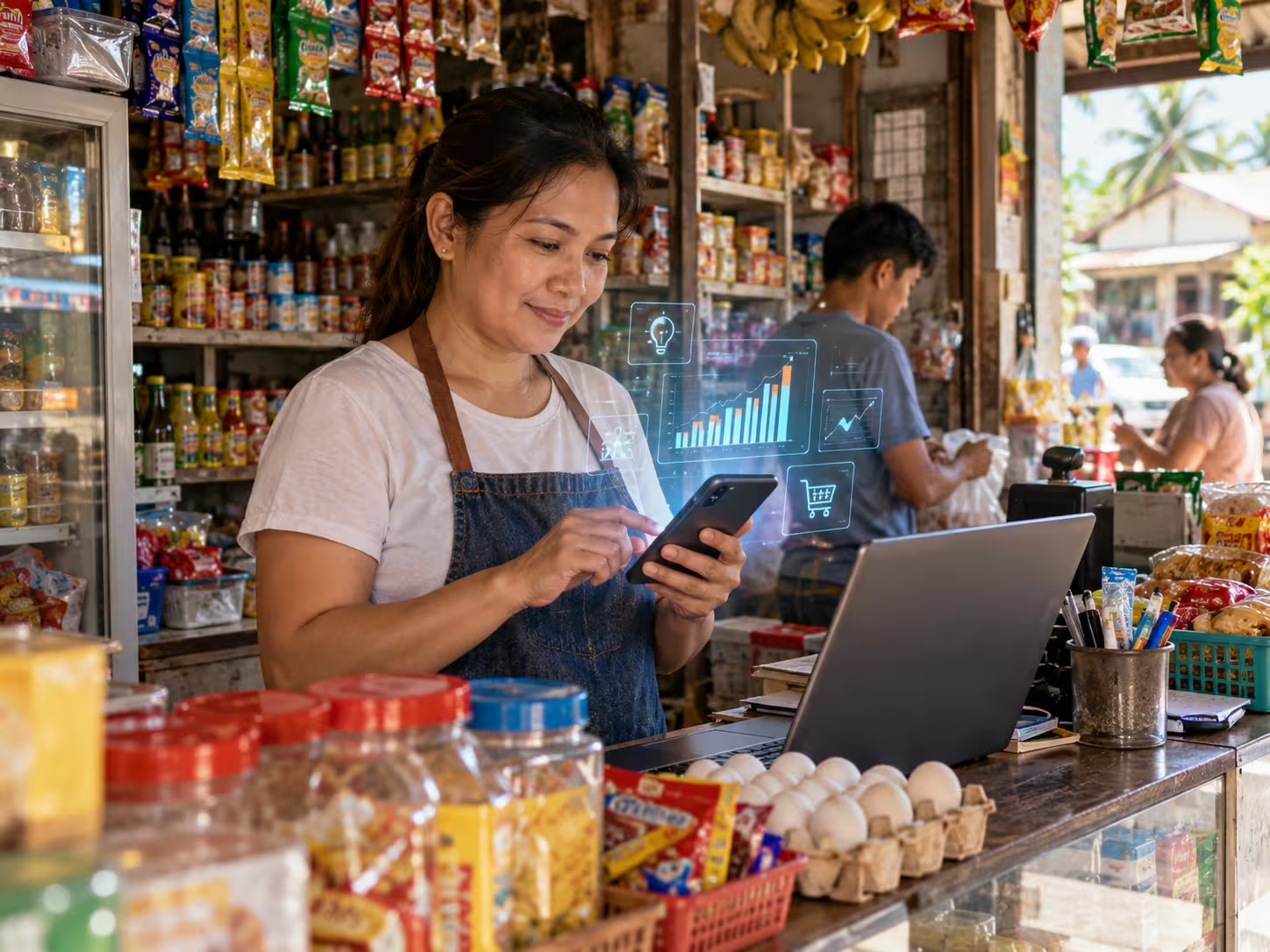
A cloud-based point-of-sale system, for example, can record a transaction and automatically update inventory. A digital payment can create an electronic trail that makes reconciliation easier. An accounting platform can organize expenses and sales records without requiring the owner to repeatedly enter the same information.
The Department of Trade and Industry has consistently shown the economic importance of the sector, with MSMEs representing more than 99 percent of registered business establishments in the Philippines. The scale of that ecosystem means even modest improvements in daily efficiency can have a broad economic effect. The DTI maintains official MSME statistics at DTI MSME Statistics.
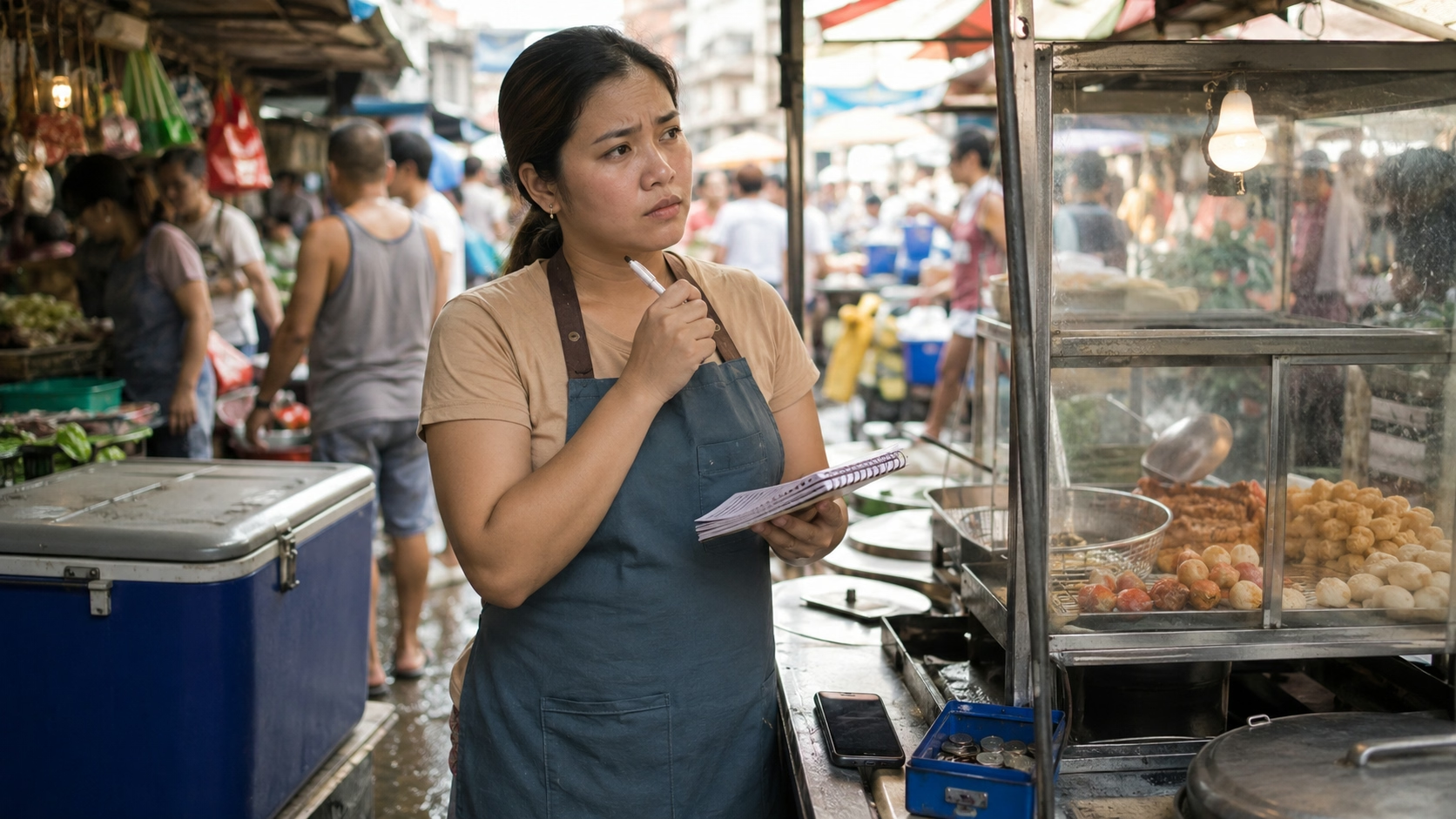
The operational advantage is particularly significant for businesses where the owner also acts as cashier, purchaser, marketer, and administrator.
A Practical Case: The Small Food Business
Consider a home-based food brand selling through social media.
Without digital integration, an employee may copy a customer order from Messenger into a spreadsheet. Another person checks available stock. Payment confirmation arrives separately through an e-wallet screenshot. Delivery details are then forwarded manually to a rider.
Every handoff creates an opportunity for error.
A more connected workflow can combine an online order form, digital payment record, cloud inventory system, and delivery tracking process. Once an order is confirmed, stock can be updated immediately and the customer can receive a standard notification.
The technology does not remove human decision-making. It removes repetitive coordination.
Why Simplicity Matters More Than the Number of Apps
Digitalization can create new problems when businesses adopt too many disconnected applications.
A small enterprise using one tool for payments, another for orders, several spreadsheets for inventory, and separate messaging channels for customer service may become digitally active without becoming operationally efficient.
The better approach is to ask a practical question: How many times must the same information be entered?
If customer details, product quantities, payment status, and delivery information must be repeatedly copied, the workflow remains inefficient.
The strongest digital systems reduce duplicate work and create a reliable source of business information.
From Owner-Dependent Operations to Scalable Systems
One of the most valuable effects of digitalization is the gradual reduction of owner dependency.
Many Philippine MSMEs operate through knowledge stored almost entirely in the founder’s memory. The owner knows which supplier offers better prices, which customer has not paid, and which product is nearly out of stock.
Digital records turn that personal knowledge into an operational system that other employees can follow.
This shift becomes essential when a business opens a second location, adds online channels, hires more workers, or serves customers outside its original community.
For Philippine MSMEs, digitalization is therefore not primarily about appearing modern. Its real value lies in creating clearer workflows, fewer manual errors, faster decisions, and a business that can function without every routine activity passing through one person.









Leave a Reply