

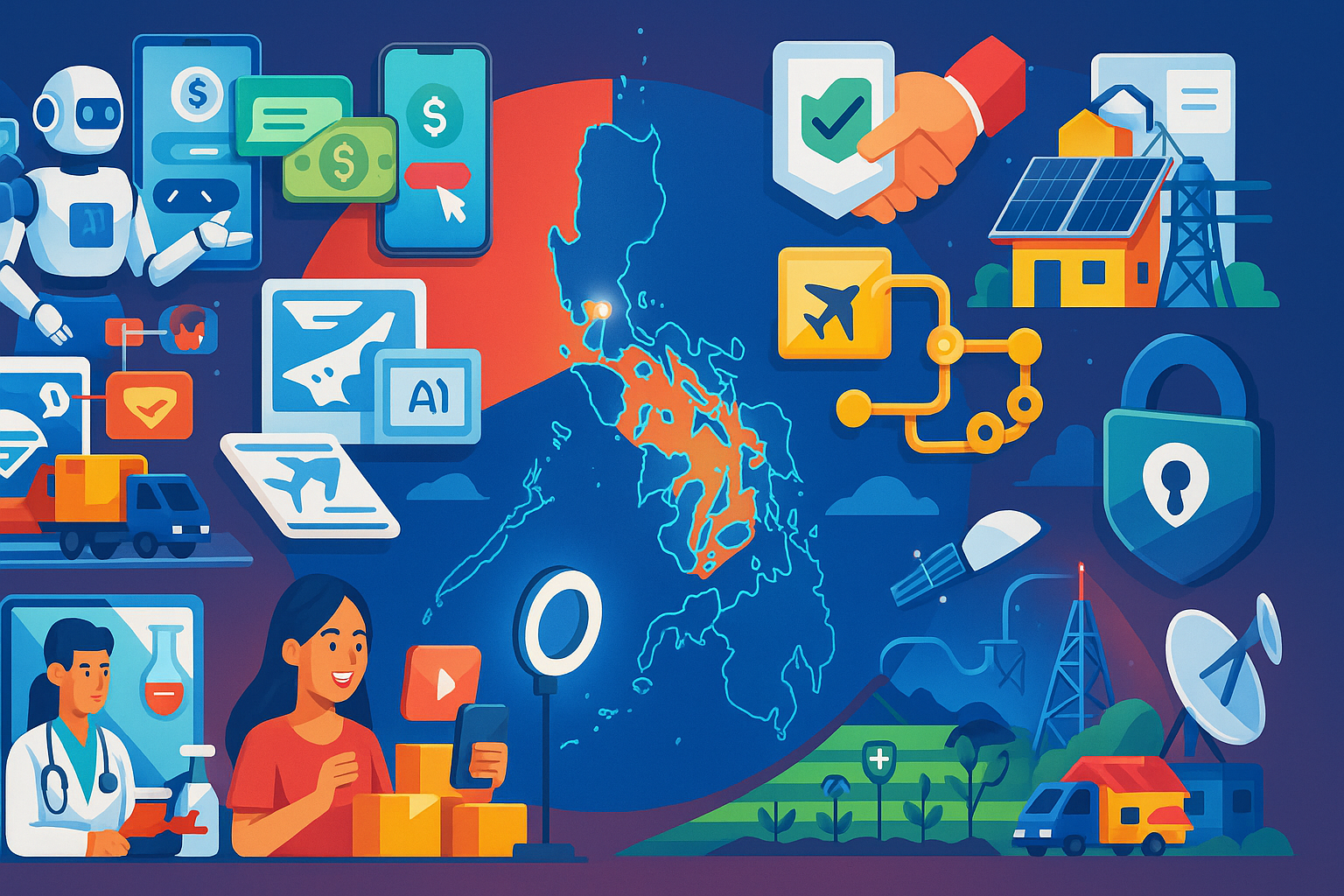
The Philippine startup scene is maturing fast, powered by a mix of infrastructure upgrades, regulatory shifts, and fresh capital. At the center are payments and open finance. With widespread e-wallet adoption and QR-based rails, startups can onboard merchants quickly, automate payouts, and offer embedded finance. The Bangko Sentral’s supportive stance on interoperability, along with sandbox environments, has encouraged experiments in microlending, BNPL for SMEs, and cross-border remittances optimized for speed and cost—vital in a country where overseas worker remittances are an economic pillar.
Artificial intelligence is moving from hype to utility. Young companies are deploying AI for fraud detection, lending risk models, customer support, and supply-demand forecasting. For BPO-adjacent startups, AI copilots increase agent productivity, while local-language models improve service quality. The constraint is data readiness; firms that invest in clean, labeled datasets and robust governance frameworks will pull ahead. Privacy and compliance still matter—the Data Privacy Act demands explicit consent, transparency, and security controls—so “move fast” now means “move safely.”
Cloud-native architectures and low-code tools reduce time-to-market. Philippine startups benefit from multi-region cloud footprints, serverless pricing, and managed services that compress DevOps overhead. This is especially important for teams competing against larger Southeast Asian rivals. The shift to event-driven systems improves real-time analytics, which pairs well with AI-powered decisioning in finance, logistics, and health.
Logistics tech remains a frontier. An archipelago requires route optimization tuned to ferries, weather, and mixed urban-rural densities. Startups are building last-mile networks that blend independent riders, micro-warehousing, and dynamic pricing. E-commerce enablement tools—inventory sync, order orchestration, and returns management—help SMEs sell across marketplaces while maintaining margins. Social commerce and live selling platforms continue to grow; analytics and creator tools that tie content to conversion are fertile ground.
Connectivity improvements—fiber expansion, 5G rollouts, and satellite internet in remote areas—broaden the addressable market. This unlocks telehealth, e-learning for dispersed populations, and agri-tech tools that rely on timely field data. In energy, climate tech is gaining interest: solar-plus-storage financing for small businesses, demand-response software, and tools for ESG reporting align with both resilience needs and corporate mandates.
Cybersecurity is no longer optional. Phishing, bot-driven abuse, and account takeovers pressure every consumer app. Startups are implementing passwordless auth, device fingerprinting, and behavior analytics, often via plug-and-play APIs. Building trust—through transparent data practices and reliable uptime—is now a competitive moat.
The funding environment is selective but not closed. Investors are rewarding disciplined unit economics, B2B contracts, and clear regulatory posture. Programs under the Innovative Startup Act and initiatives by DICT and DTI provide soft support—grants, visas, and participation in international showcases—while corporate venture arms look for strategic fits in fintech, health, and logistics.
Winning playbooks emphasize partnerships: with banks for compliance and distribution, with telcos for data and reach, and with local governments for permits and pilots. The startups that thrive will pair global-grade engineering with deep local intuition—designing for cash-heavy segments, patchy logistics, and multilingual customer bases—while using AI and open finance to scale faster than the market’s constraints.