

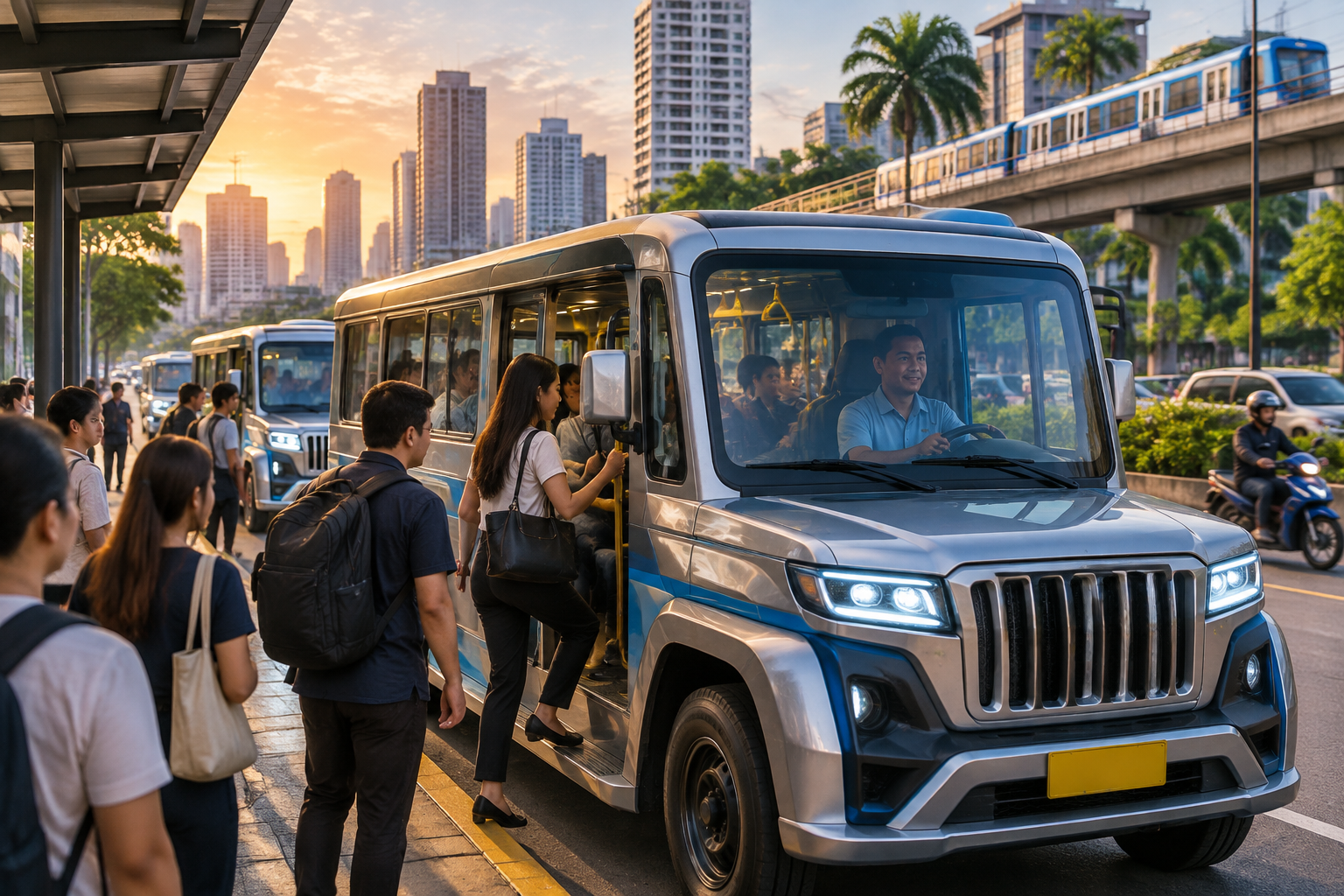
The Philippine Public Utility Vehicle Modernization Program (PUVMP), launched in 2017, has entered its most consequential phase in 2026. What began as a policy ambition to replace aging jeepneys with safer, eco-friendlier units has evolved into a complex restructuring of an entire industry—one where transport cooperatives, local governments, and financial institutions now play central roles.
The Long Road to Consolidation
The original deadline for jeepney operators to consolidate into cooperatives or corporations was June 30, 2020. It has since been extended multiple times, with compliance pushed well into the mid-2020s. By 2026, the Land Transportation Franchising and Regulatory Board (LTFRB) reports that a significant majority of routes in Metro Manila and key provinces are now served by consolidated entities.
This shift has not been seamless. Operators who failed to join cooperatives faced franchise revocation, sparking protests and, in some regions, route shortages. Meanwhile, cooperatives that successfully consolidated often struggled with the financial burden of acquiring new units, which can cost between ₱1.8 million and ₱2.5 million each.
Cooperatives as the New Backbone
Transport cooperatives have emerged as the primary vehicle for modernization compliance. These entities pool resources, access government subsidies, and negotiate fleet financing collectively. The Office of Transportation Cooperatives (OTC) has accredited hundreds of such groups nationwide.
Inside the Cooperative Model
For drivers, the cooperative model offers a mixed bag. On one hand, it provides access to modern units and formal employment benefits. On the other, many drivers report that “boundary” systems have been replaced by fixed salaries that, while more predictable, sometimes fall short of previous earnings.
Financing Hurdles and Local Government Support
The government’s equity subsidy program, administered through the Development Bank of the Philippines (DBP) and Land Bank of the Philippines, offers grants of up to ₱160,000 per unit. However, cooperatives argue that this covers only a fraction of the total cost. Loan terms, collateral requirements, and long approval processes remain significant barriers.
Some local government units (LGUs) have stepped in with additional support. In cities like Valenzuela and Quezon City, LGU-backed financing schemes and route rationalization plans have eased the transition. Yet, the patchwork nature of LGU involvement means that progress varies widely across regions.
What Riders Actually Notice
From the passenger’s perspective, the modernization has yielded tangible improvements. New jeepneys feature higher ceilings, GPS tracking, CCTV cameras, and cashless payment options. Air conditioning, once a rarity, is now standard on many routes.
However, fare increases have accompanied these upgrades. The minimum fare for modern jeepneys is higher than that of traditional units, raising concerns about affordability for low-income commuters.
The Road Ahead
As 2026 unfolds, the focus is shifting from compliance to sustainability. Cooperatives are exploring fleet expansion, digital dispatch systems, and partnerships with ride-hailing platforms. The LTFRB, for its part, is refining route plans and monitoring service quality.
For a comprehensive view of current policies and updates, the LTFRB’s official portal (https://ltfrb.gov.ph) remains the most authoritative source.
The jeepney’s transformation is far from complete, but it has undeniably entered a new chapter—one where the iconic vehicle of Philippine streets is being reimagined for a more demanding and environmentally conscious era.







Leave a Reply