

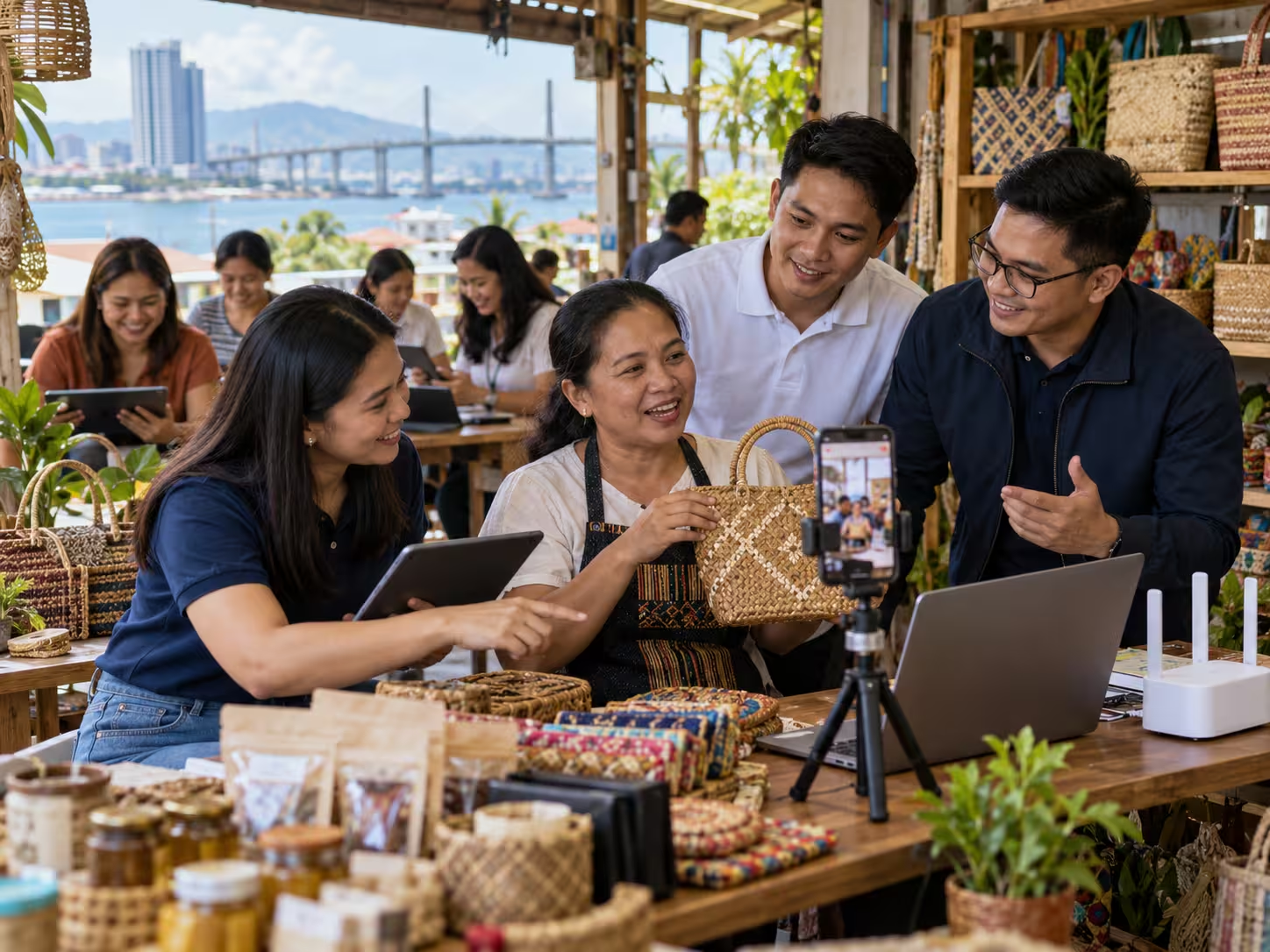
A Market Moving Faster Than Policy
The Philippine social commerce market is expected to grow by 11.7% on an annual basis to reach US$28.77 billion in 2026, following a robust 13.1% CAGR during 2022–2025. What makes this figure striking is not just its scale but the speed at which micro, small and medium enterprises have migrated from traditional retail models into creator-led, video-first selling formats. By the end of 2031, the sector is projected to expand to approximately US$46.68 billion, representing a sustained growth trajectory that has attracted both platform investment and regulatory attention.
From Follower to Buyer in a Single Scroll
The structural shift driving this growth is what industry analysts call “discovery e-commerce” — a model where products are encountered through entertainment content rather than traditional search queries. YouTube Shopping’s launch in the Philippines through Shopee, which allows creators to tag products in videos, Shorts, and livestreams, exemplifies how platforms are collapsing the distance between content consumption and transaction completion. This is not a one-off feature launch; it signals that platforms now intend to control discovery, evaluation, and conversion within a single, uninterrupted sequence.
The MSME Angle Nobody Can Ignore
For Filipino MSMEs, the implications are profound. According to the Department of Trade and Industry (DTI), the Philippines’ digital economy generated P2.74 trillion in gross value added in 2025 — equivalent to 9.8% of national GDP — with e-commerce contributing over 32% of that total. Small businesses that once depended on physical foot traffic in provincial trade fairs now reach national audiences through a smartphone and a livestream. Mia Velasco Reyes, owner of Cley’s Crab Paste in Bataan and known as the “Aligue Queen,” generated approximately ₱250,000 in sales in a single day through a TikTok livestream — a figure that would have been unimaginable through traditional retail channels alone.
What the Data Tells Sellers
The market intelligence is clear: video formats are no longer media inventory but sales infrastructure. More brands and merchants will treat creator-led videos, tagged product content, and live sessions as core commercial tools. For MSMEs, the competitive advantage lies not in budget size but in authenticity, consistency, and the ability to tell a product story in 30 seconds or less.









Leave a Reply