

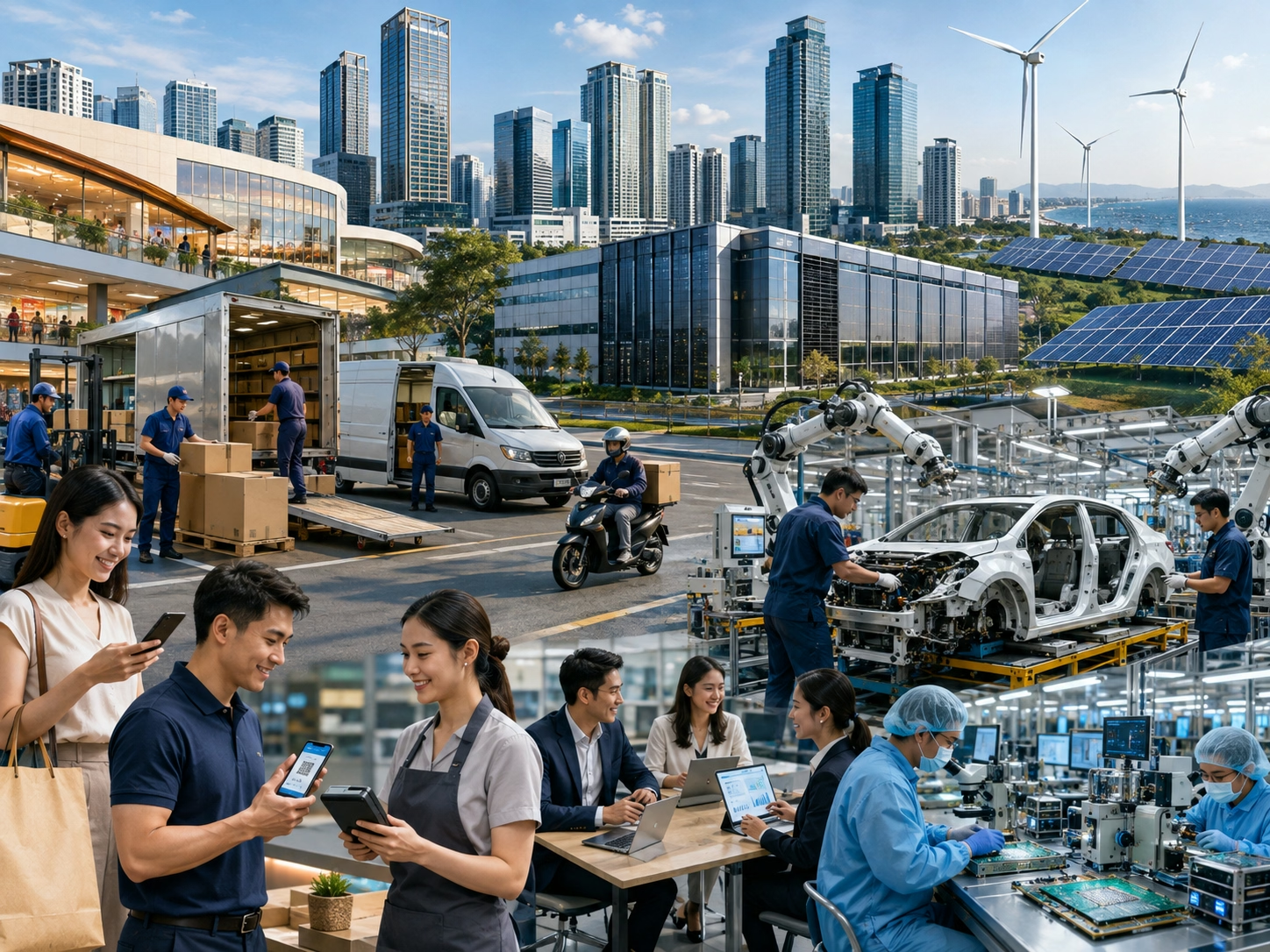
The Philippine economic landscape in 2026 is a testament to resilience, yet the apex of its corporate hierarchy remains dominated by a familiar set of names. While startups and fintech grab headlines, the true titans of industry—the legacy conglomerates—are undergoing a massive internal transformation. These holding companies are no longer just sprawling entities with diversified portfolios; they are becoming aggressive tech-forward ecosystems.
SM Investments Corporation: The Retail Behemoth’s Digital Shift
As the largest conglomerate by market capitalization, SM Investments Corporation (SMIC) continues to set the pace. However, 2026 analysis reveals that SM’s growth is no longer primarily driven by brick-and-mortar malls. The corporation has successfully pivoted to a hybrid retail model. SM’s acquisition and integration of logistics networks have paid off, allowing them to dominate the e-commerce fulfillment space.
The banking arm, BDO Unibank, remains the crown jewel, contributing the lion’s share of the group’s net income. In 2026, BDO has aggressively expanded its digital lending portfolio, targeting the underbanked middle class. According to the Philippine Stock Exchange (PSE) disclosures in early 2026, SMIC’s capital expenditures are heavily weighted toward data centers and renewable energy projects, signaling a shift from pure consumerism to infrastructure support.
The Ayala Corporation: The Pioneer of Green Capital
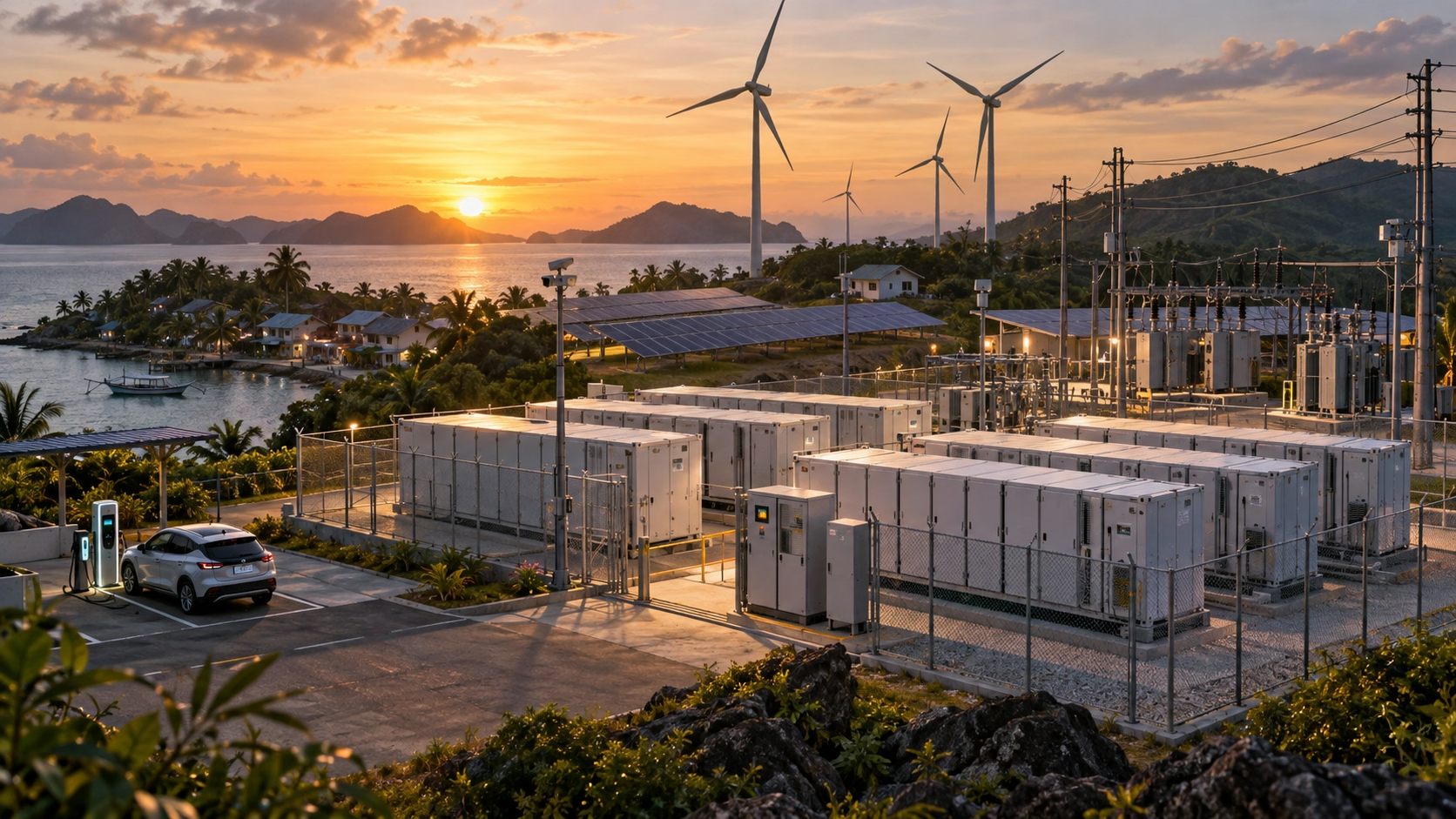
Ayala Corporation is spearheading the shift toward sustainable infrastructure. Historically known for real estate (Ayala Land) and banking (BPI), Ayala’s 2026 trajectory is defined by ACEN, its energy platform. The company has successfully transitioned its power generation portfolio to nearly 100% renewables, a feat that has attracted significant foreign ESG (Environmental, Social, and Governance) investments.
But the most interesting 2026 development is Ayala’s foray into healthcare technology and electric vehicle (EV) manufacturing. Leveraging its industrial arm, AC Industrials, Ayala is positioning itself as the primary supplier for the EV supply chain in Southeast Asia. This move is not just profit-driven; it is a hedge against the declining margins in traditional real estate due to the hybrid work setup prevalent in Metro Manila.
JG Summit and the Gokongwei Pivot
The Gokongwei family’s JG Summit has faced headwinds in the aviation sector with Cebu Pacific, but the conglomerate is bouncing back strongly in 2026 through its petrochemical and food divisions. Universal Robina Corporation (URC) has aggressively expanded into the plant-based protein market, capturing a new generation of consumers. Meanwhile, JG Summit’s decision to invest heavily in chip manufacturing—a critical shortage area globally—has positioned the Philippines as a new node in the semiconductor supply chain.
This dynamic shows that the “largest” companies in 2026 are not just those with the most assets, but those agile enough to pivot from traditional rent-seeking models to high-tech manufacturing and digital services.








Leave a Reply