


From Local Weaves to Global Carts: The New Export Playbook
For decades, the phrase “export business” conjured images of large conglomerates, container ships, and layers of customs paperwork. In 2026, that image is being rewritten by a 28-year-old weaver in Aklan and a food processor in Iloilo. Philippine micro, small, and medium enterprises (MSMEs) are no longer waiting for international buyers to find them at trade fairs—they are listing products directly on cross-border platforms and shipping to customers in Tokyo, Los Angeles, and Dubai.
The shift is not merely technological. It is structural. The ASEAN Digital Economy Framework Agreement (DEFA), signed in Manila in November 2026, establishes common rules on cross-border e-commerce, digital payments, and data flows across Southeast Asia . For Filipino MSMEs, which constitute 99.6 percent of registered businesses and employ roughly two-thirds of the country’s workforce, this represents the most significant trade facilitation since the country joined the WTO .
The Platform Economy Meets Artisan Production
The practical mechanics are already visible. At the ASEAN Trade Expo 2026, organizers launched Kahanga-Hangang Pilipinas, an online platform designed to let overseas buyers browse and order Philippine-made products long after the exhibition halls close . The initiative, developed alongside the Department of Trade and Industry’s Export Marketing Bureau, reflects a broader recognition: trade shows generate leads, but digital platforms generate recurring revenue.
Meanwhile, the DTI’s Western Visayas office has unveiled a three-year roadmap that includes an e-Export Academy to train business owners in digital marketing and online sales, paired with a Regional Export One-Stop-Shop to simplify compliance paperwork . The approach acknowledges a hard truth: Filipino products have always been export-ready in quality, but the administrative friction of going global has kept too many small producers on the sidelines.
What Sells—and What Holds Sellers Back
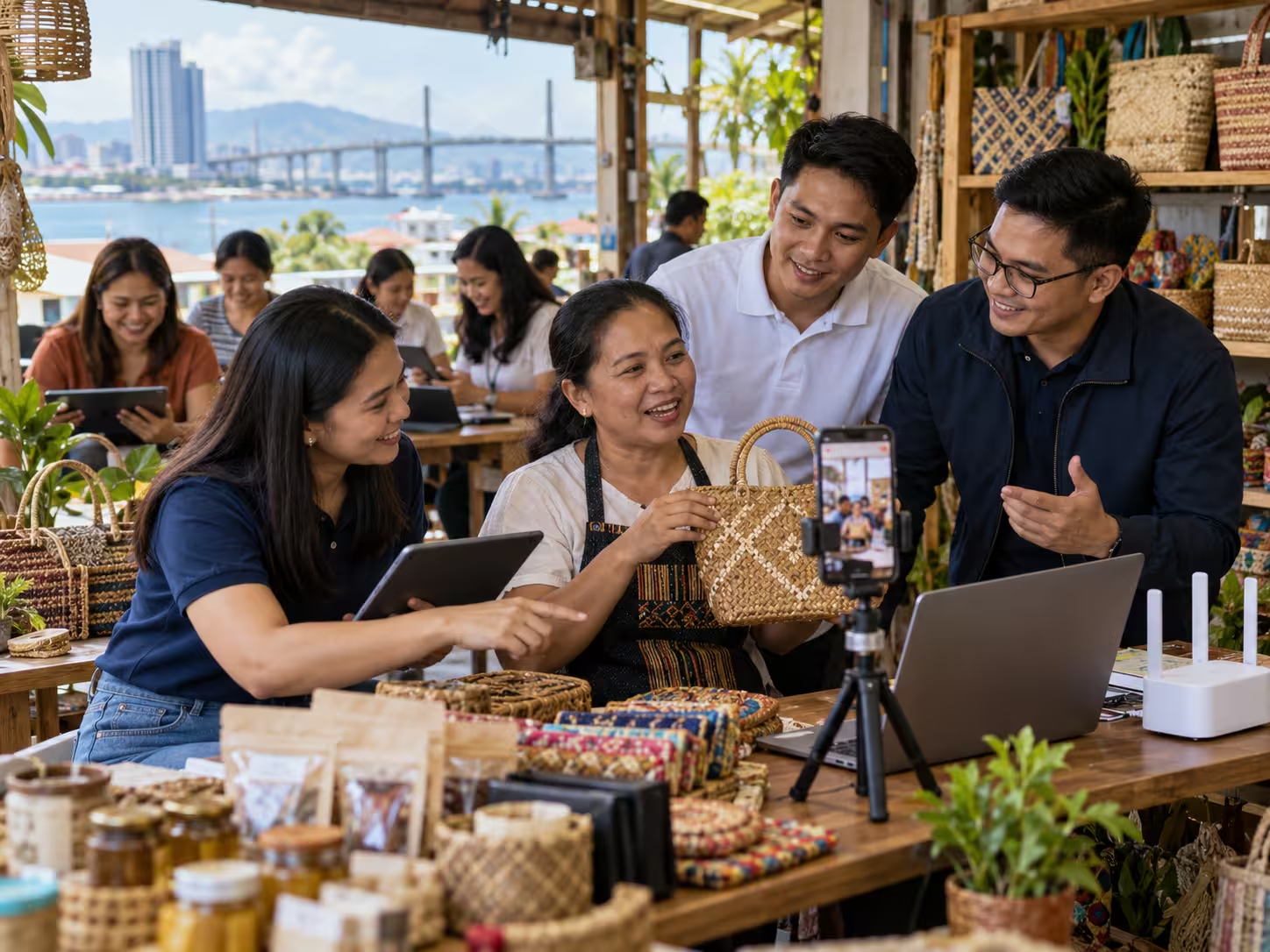
The product categories finding traction abroad are not generic commodities. They are distinctly Filipino: handwoven textiles, heritage foods, and curated home goods. Aklan’s nito and piña crafts are being positioned for European and Japanese buyers seeking sustainable, story-driven products . Guimaras mangoes and Iloilo’s premium seafood are targeting niche gourmet markets.
Yet the barriers remain concrete. A 2026 policy note from the Philippine Institute for Development Studies found that while women-led MSMEs have embraced e-commerce domestically, awareness of cross-border opportunities and government support programs remains low . The same digital tools that make selling possible also expose gaps in logistics literacy, payment reconciliation, and international returns handling.
The infrastructure is improving. The DTI plans to leverage the Visayas Container Terminal in Iloilo to consolidate freight and cut regional shipping costs by 15 percent . But for a solo entrepreneur shipping a single order to Singapore, the learning curve is still steep. The difference in 2026 is that the curve is now being mapped—by government programs, by platforms, and by a generation of sellers who grew up transacting online.







Leave a Reply