

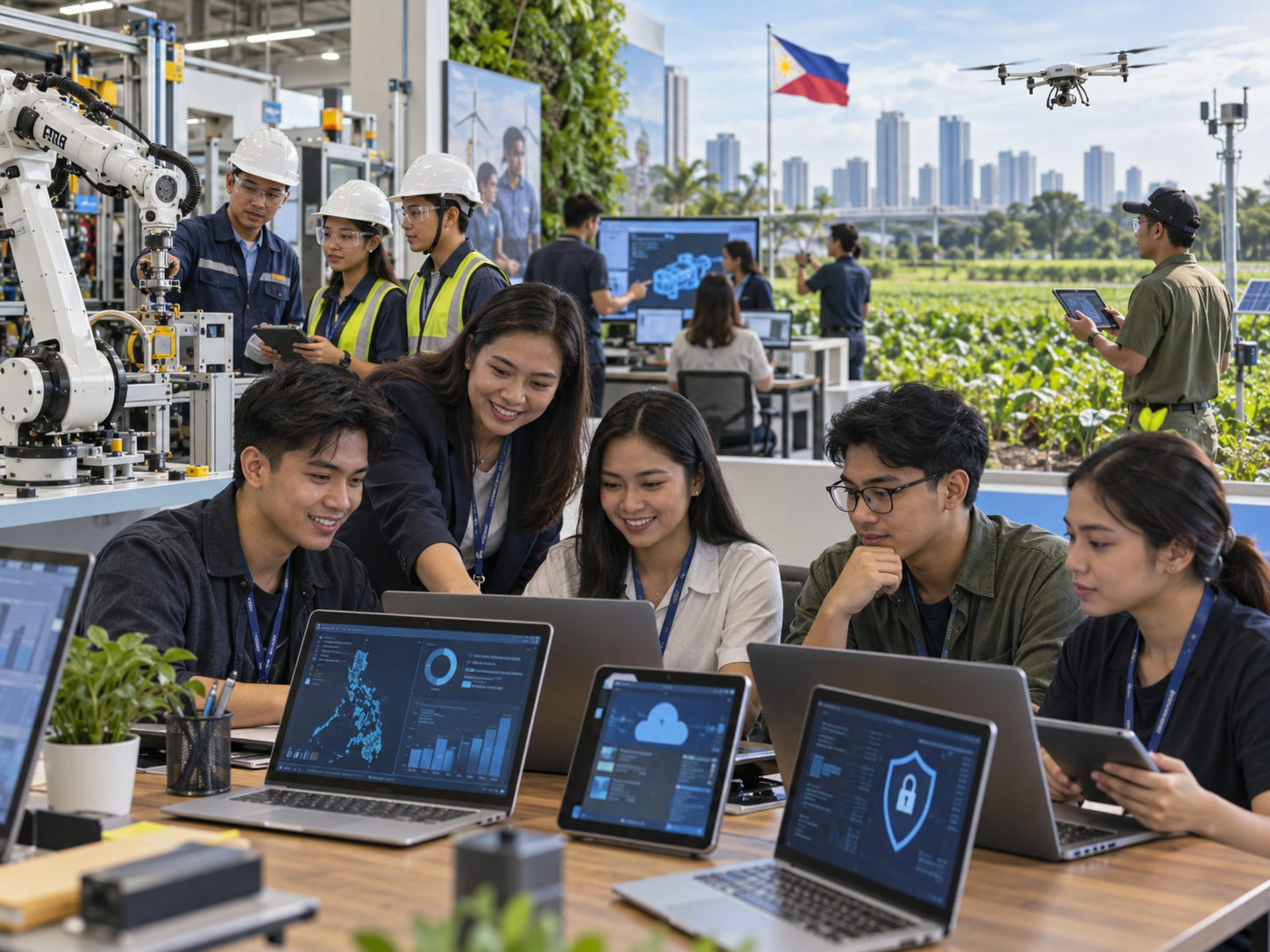
The Philippine labor market stands at a critical juncture. As the calendar approaches 2026, the nation is aggressively pivoting from a degree-centric hiring model toward a competency-based economy. The traditional education system is no longer sufficient to meet the demands of a rapidly digitizing global landscape. Instead, a robust ecosystem of professional education and training is emerging to sculpt a generation of workers who are not just employable, but globally competitive.
The Micro-Credentialing Surge and TESDA’s Evolution
The Technical Education and Skills Development Authority (TESDA) has undergone a significant paradigm shift. It is no longer solely focused on traditional vocational trades. By 2026, TESDA is leading the charge in “stackable credentials”—short, targeted courses that allow workers to upskill without leaving the workforce entirely.
This surge in micro-credentialing is driven by the need for agility. In the Business Process Outsourcing (BPO) sector and the burgeoning Information Technology (IT) industry, employers are seeking candidates with specific proficiencies in data analytics, cloud computing, and cybersecurity. Rather than requiring four-year degrees, many multinational firms operating in Metro Manila and Cebu are now prioritizing portfolios and TESDA-validated certifications. This shift democratizes opportunity, allowing individuals from diverse socioeconomic backgrounds to enter high-paying tech roles through intensive bootcamps rather than expensive university tracks.
Industry 4.0 and the Integration of AI in Training
The infiltration of Artificial Intelligence (AI) into the Philippine workspace is not a threat but a catalyst for training reform. The approach in 2026 is pragmatic: if machines handle repetitive tasks, humans must master machine management.
Training modules have been overhauled to include AI literacy. For instance, agricultural training programs in Mindanao now utilize drone technology and data-driven soil analysis, teaching farmers to interpret complex datasets to maximize yield. Similarly, in the manufacturing sector, training centers in economic zones like PEZA (Philippine Economic Zone Authority) are simulating smart factory environments. Workers are trained on predictive maintenance and robotics programming, ensuring that Philippine manufacturing remains a viable destination for foreign investment.
The Role of Public-Private Partnerships (PPP)
State funding alone cannot fuel this educational overhaul. The most successful training initiatives in 2025 and 2026 are hybrids. Corporations are actively co-developing curricula with academic institutions. For example, the rise of “Enterprise-Based Training” (EBT) allows companies to hire trainees and train them on-site, with the government subsidizing a portion of the wage.
This model ensures zero mismatch between education and employment. A report by the Philippine Institute for Development Studies (PIDS) highlights that regions with high EBT adoption report lower youth unemployment rates. By embedding students directly into the workflow, the transition from “learner” to “productive employee” becomes seamless. The future of Philippine education is not confined to classrooms; it is happening on factory floors, in IT parks, and within digital collaboration hubs.









Leave a Reply