

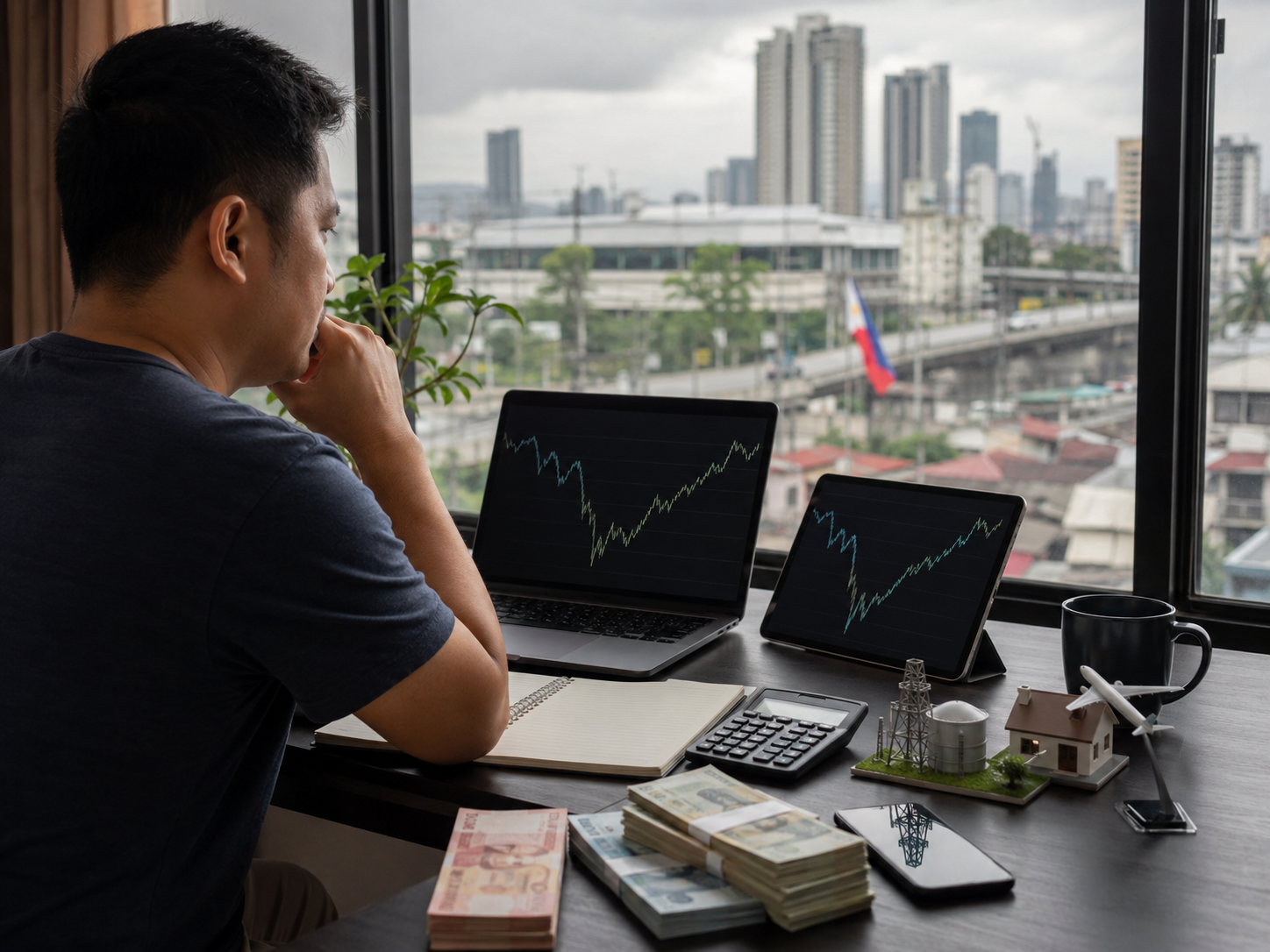
The COVID-19 pandemic did more than push Philippine share prices lower. It exposed how quickly liquidity, investor confidence, corporate earnings, and government policy can reshape an entire stock market.
When strict lockdowns were introduced in March 2020, economic activity across Metro Manila and other major business centers slowed abruptly. Offices, shopping malls, hotels, factories, airports, and construction sites either closed or operated under severe restrictions. Investors responded by reducing exposure to companies whose revenues depended heavily on physical mobility.
The Philippine Stock Exchange temporarily suspended trading on March 17 and 18, 2020, as the Luzon lockdown disrupted financial operations. When trading resumed on March 19, the Philippine Stock Exchange Index, or PSEi, dropped 13.34 percent and closed at 4,623.42.
Historical market figures and listed-company reports can be reviewed through the Philippine Stock Exchange market statistics portal.
Why the Sell-Off Became So Severe
The fall was driven by several risks arriving simultaneously. Foreign investors withdrew capital from emerging markets, businesses faced uncertain cash flows, and analysts struggled to estimate how long movement restrictions would last.
Highly leveraged companies became especially vulnerable. Property developers, airlines, casino operators, restaurant groups, and retailers faced weaker revenues while continuing to pay interest, salaries, rent, and other fixed expenses.
Banks also came under pressure because investors expected loan defaults to increase. Even financially sound companies experienced falling share prices because many investors prioritized cash and liquidity over long-term valuation.
The Difference Between Price Risk and Business Risk
One important lesson was that a sharp price decline did not always mean a company had permanently lost its value. Some shares fell because investors urgently needed liquidity, not because the underlying businesses were approaching collapse.
Companies with strong balance sheets, manageable debt, recurring income, and reliable access to credit generally had more room to survive the disruption. Investors who examined cash flow and financial resilience were better positioned than those who reacted only to daily market movements.
The Recovery Began Before the Economy Fully Reopened
The Philippine economy contracted by 9.5 percent in 2020, yet the PSEi recovered significantly from its March low and ended the year at approximately 7,139.71.
This apparent contradiction illustrated a basic market principle: stock prices usually reflect expectations about future earnings rather than current economic conditions.
Lower interest rates, monetary support from the Bangko Sentral ng Pilipinas, government spending, global liquidity, and optimism surrounding vaccines encouraged investors to return to equities. Expectations of reopening were priced into many shares months before business conditions normalized.
Sector Performance Was Uneven
The pandemic created a clear divide between businesses dependent on physical traffic and those benefiting from digital demand.
Travel, hospitality, commercial property, and discretionary retail suffered major disruptions. Telecommunications, digital payment providers, logistics companies, utilities, and selected consumer businesses showed greater resilience.
The crisis also increased investor interest in real estate investment trusts. AREIT became the country’s first listed REIT in 2020, offering investors access to income-producing property assets during a period of low interest rates.
What Philippine Investors Should Carry Into 2026
The central lesson is not that investors should always buy during a crash. The stronger lesson is that market shocks reward preparation.
A resilient strategy requires diversification, cash reserves, careful debt analysis, and attention to corporate governance. Investors should also distinguish temporary operational disruption from permanent business-model weakness.
The pandemic demonstrated that the PSE can recover before economic data improves, but recovery does not benefit every company equally. In future crises, balance-sheet strength, liquidity, recurring revenue, and management discipline are likely to remain more valuable than short-term market popularity.








Leave a Reply