

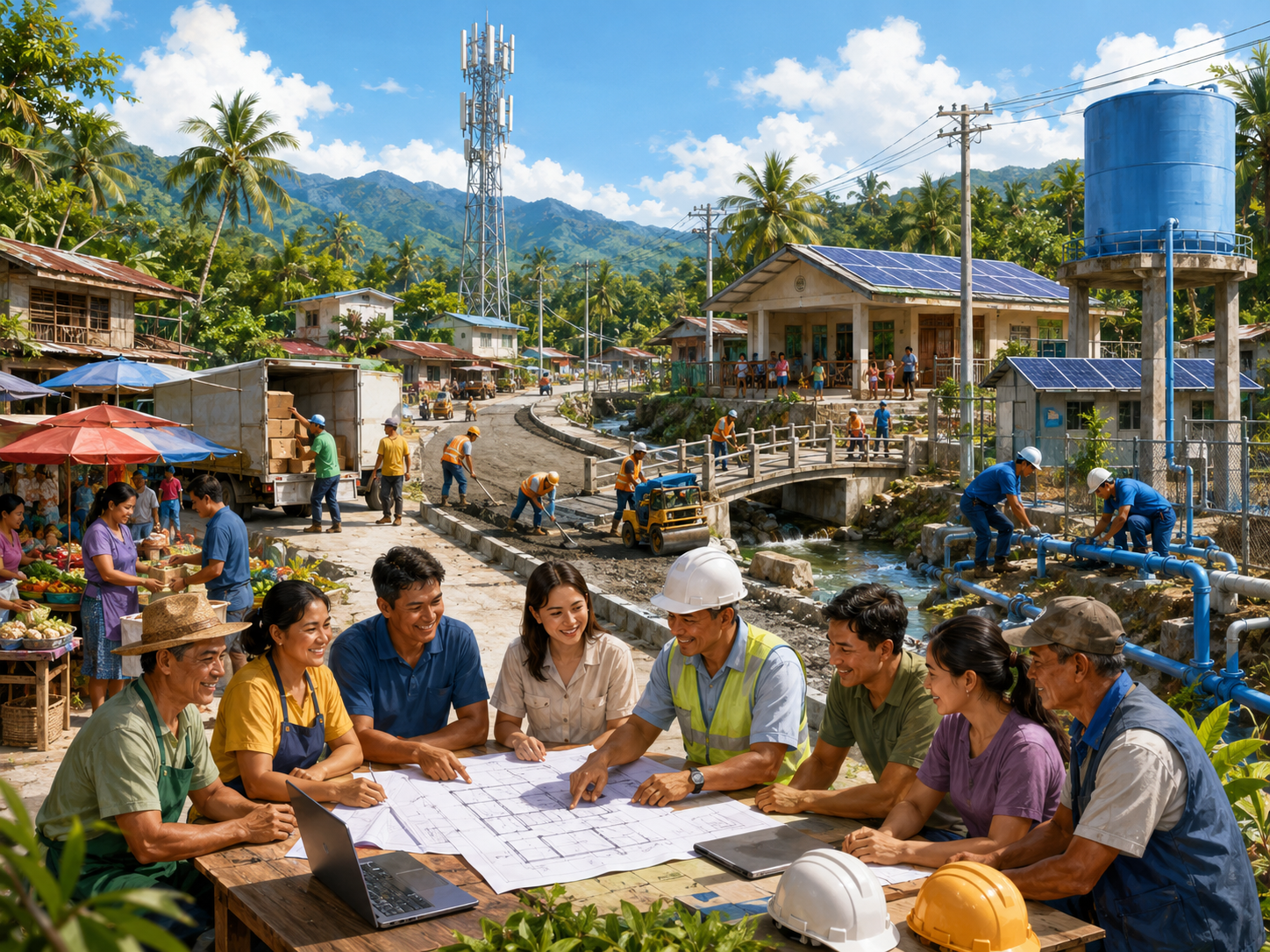
Small and medium-sized enterprises (SMEs) play a pivotal role in driving economic development in the Philippines, particularly at the local level. Their contributions extend beyond employment generation and income creation, directly impacting the development and enhancement of community infrastructure. In many regions, SMEs act as catalysts for building roads, transportation facilities, utilities, and social amenities, helping to foster inclusive growth.
The Philippine government has long recognized the importance of SMEs in local economic development. Through initiatives such as the Department of Trade and Industry’s (DTI) SME Development Plan, entrepreneurs are encouraged to participate in projects that improve public facilities and community resources. These initiatives aim to create a sustainable ecosystem where small businesses thrive while simultaneously contributing to infrastructure improvements. In practice, SMEs often partner with local governments or cooperatives to provide essential services or support construction projects, ensuring that local infrastructure evolves to meet the needs of a growing population.
One significant way SMEs influence infrastructure development is by stimulating local demand for construction materials and services. Local businesses often source materials from nearby suppliers, creating a multiplier effect that benefits the broader local economy. For example, a small manufacturing firm might commission new warehouses or factory extensions, requiring road upgrades or utility expansions. In such cases, SMEs indirectly prompt local authorities to enhance infrastructure to accommodate growing commercial activities.
Moreover, SMEs frequently innovate and adapt infrastructure solutions tailored to local conditions. In rural or underdeveloped areas, traditional construction and utility systems may be impractical or too costly. SMEs often introduce alternative solutions such as modular construction, small-scale renewable energy installations, or community-based water systems, filling gaps where large-scale projects are not feasible. These localized initiatives ensure that infrastructure development is not only effective but also sustainable and context-sensitive.
Financial contributions from SMEs also support community development projects. Many companies allocate a portion of their revenues toward corporate social responsibility (CSR) programs, funding small-scale infrastructure improvements like playgrounds, local roads, and sanitation facilities. These initiatives enhance the quality of life for residents while simultaneously creating a more conducive environment for business operations.
Finally, SMEs serve as a bridge between local communities and national development priorities. By engaging in collaborative projects with government agencies, NGOs, and other stakeholders, small businesses help ensure that infrastructure projects are both economically viable and socially inclusive. Their involvement guarantees that local voices are heard, leading to projects that address real community needs rather than purely top-down planning approaches.
In summary, SMEs in the Philippines are more than just engines of employment—they are active participants in shaping local infrastructure. Through financial support, innovative solutions, and partnerships with government and civil society, these enterprises significantly influence the quality and accessibility of essential services. Their presence fosters an environment where infrastructure development aligns with local economic growth, ultimately strengthening the resilience and prosperity of Philippine communities.










Leave a Reply