
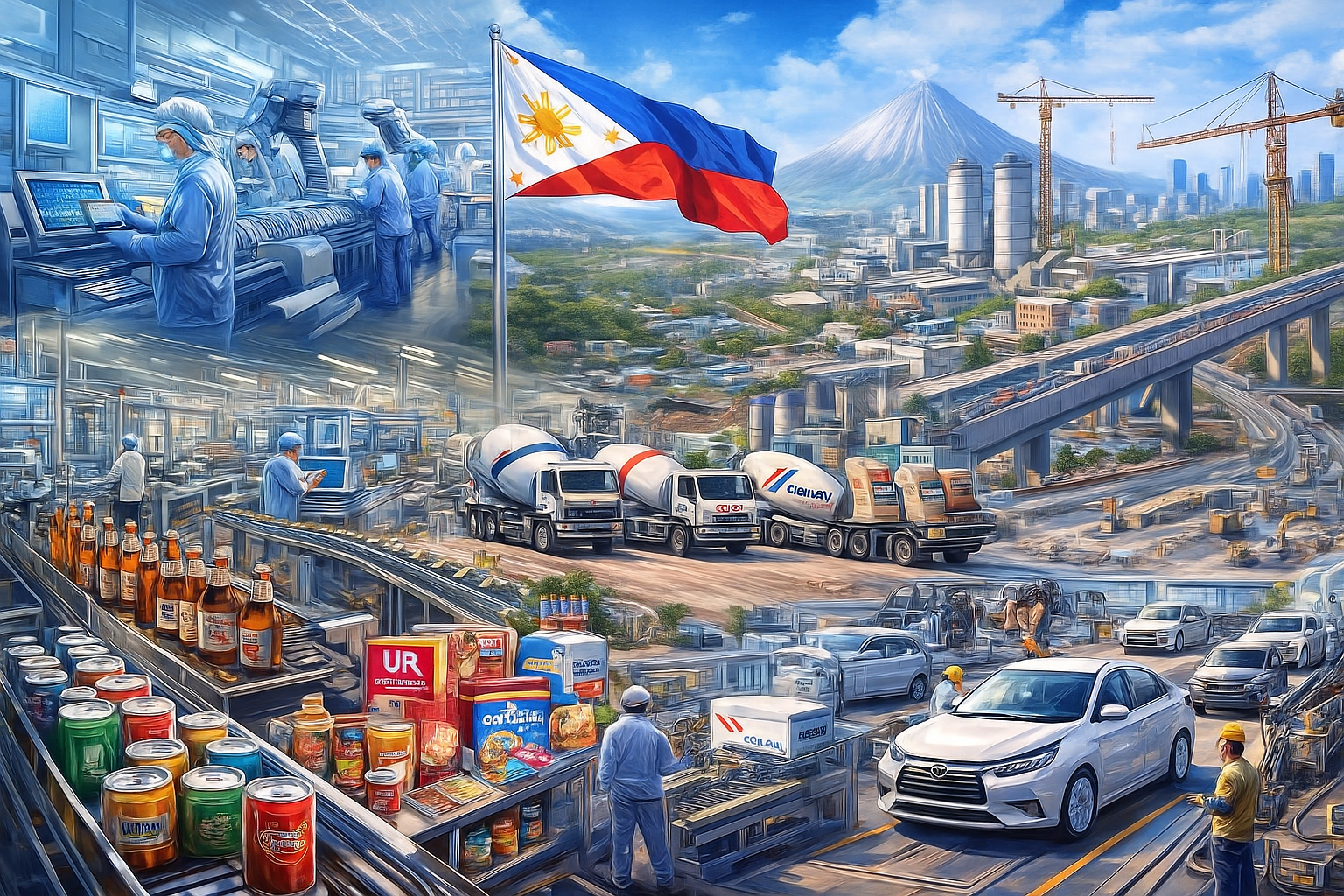
The manufacturing industry in the Philippines has become one of the key drivers of the country’s economic growth, supported by strong domestic demand and its strategic location in Southeast Asia. At the heart of this sector are a number of large companies that dominate specific industries such as electronics, food and beverage, and construction materials. These firms not only generate jobs but also pull in foreign investment, transfer technology, and help integrate the country into global value chains.
One of the most influential pillars of Philippine manufacturing is the electronics and semiconductor segment. Global players such as Texas Instruments Philippines, Analog Devices Philippines, and ON Semiconductor have long operated large facilities in the country, particularly in economic zones in Baguio, Clark, and Calabarzon. These companies assemble and test microchips, sensors, and other components used in consumer electronics, automobiles, and industrial equipment. Their operations demonstrate the country’s strength in labor-intensive but technically complex processes, supported by engineers and technicians trained in local universities.
The food and beverage industry is another major contributor, led by powerhouse corporations. San Miguel Corporation (SMC) stands out as one of the largest and most diversified conglomerates in the Philippines. Its portfolio includes beer, processed meats, dairy, and various packaged food products. With extensive manufacturing plants and distribution networks across the archipelago, SMC brands are part of everyday life for many Filipinos. Alongside SMC, Universal Robina Corporation (URC) and Monde Nissin produce snacks, instant noodles, beverages, and bakery products that are exported across Asia and beyond, underscoring the country’s growing presence in regional food markets.
In the area of consumer goods and household products, Nestlé Philippines is a major player. With multiple factories producing coffee, powdered milk, infant nutrition, and culinary products, Nestlé has embedded itself deeply in the local supply chain by sourcing raw materials from Filipino farmers where possible. Its emphasis on sustainability, farmer training, and responsible sourcing supports rural livelihoods while ensuring a stable supply for its manufacturing lines.
The construction and building materials sector is led by firms such as Holcim Philippines, CEMEX Holdings Philippines, and Republic Cement. These companies operate cement plants throughout the country, supplying critical materials for infrastructure projects, housing, and commercial buildings. As the Philippine government and private sector continue to invest in roads, bridges, airports, and industrial parks, demand for cement and related products has remained robust, making these manufacturers central to long-term development.
Automotive manufacturing also plays a significant role, though on a smaller scale compared to electronics and food. Toyota Motor Philippines and Mitsubishi Motors Philippines assemble vehicles locally, supplying the domestic market and some neighboring countries. Alongside them, auto parts producers and wire harness manufacturers, including firms linked to Yazaki and Sumitomo, operate in industrial estates, contributing to the broader automotive supply chain.
Overall, the leading manufacturing companies in the Philippines form an interconnected ecosystem. Electronics exporters bring in foreign exchange, food and beverage companies serve both local and regional markets, cement producers enable physical development, and automotive firms support mobility. Their continued investments in technology, workforce training, and sustainability will largely determine how competitive the country remains in the evolving landscape of global manufacturing.