
In the Philippines, small and medium-sized enterprises (SMEs) play a vital role in the nation’s economy, accounting for more than 99% of businesses and providing significant employment opportunities. Recognizing their importance, the Philippine government has introduced various programs and policies to support entrepreneurship and foster the growth of SMEs.
One of the key government agencies involved in promoting entrepreneurship is the Department of Trade and Industry (DTI). The DTI has been proactive in offering services like business registration assistance, product development, marketing, and access to financing. Through the DTI’s various programs, Filipino entrepreneurs are empowered with the tools they need to launch and sustain their businesses.
Moreover, the government has focused on creating a conducive environment for SMEs by simplifying the regulatory processes. The Philippine Business Registry (PBR) system is a notable initiative that allows entrepreneurs to register their businesses online, eliminating cumbersome procedures and reducing the time it takes to start a business.
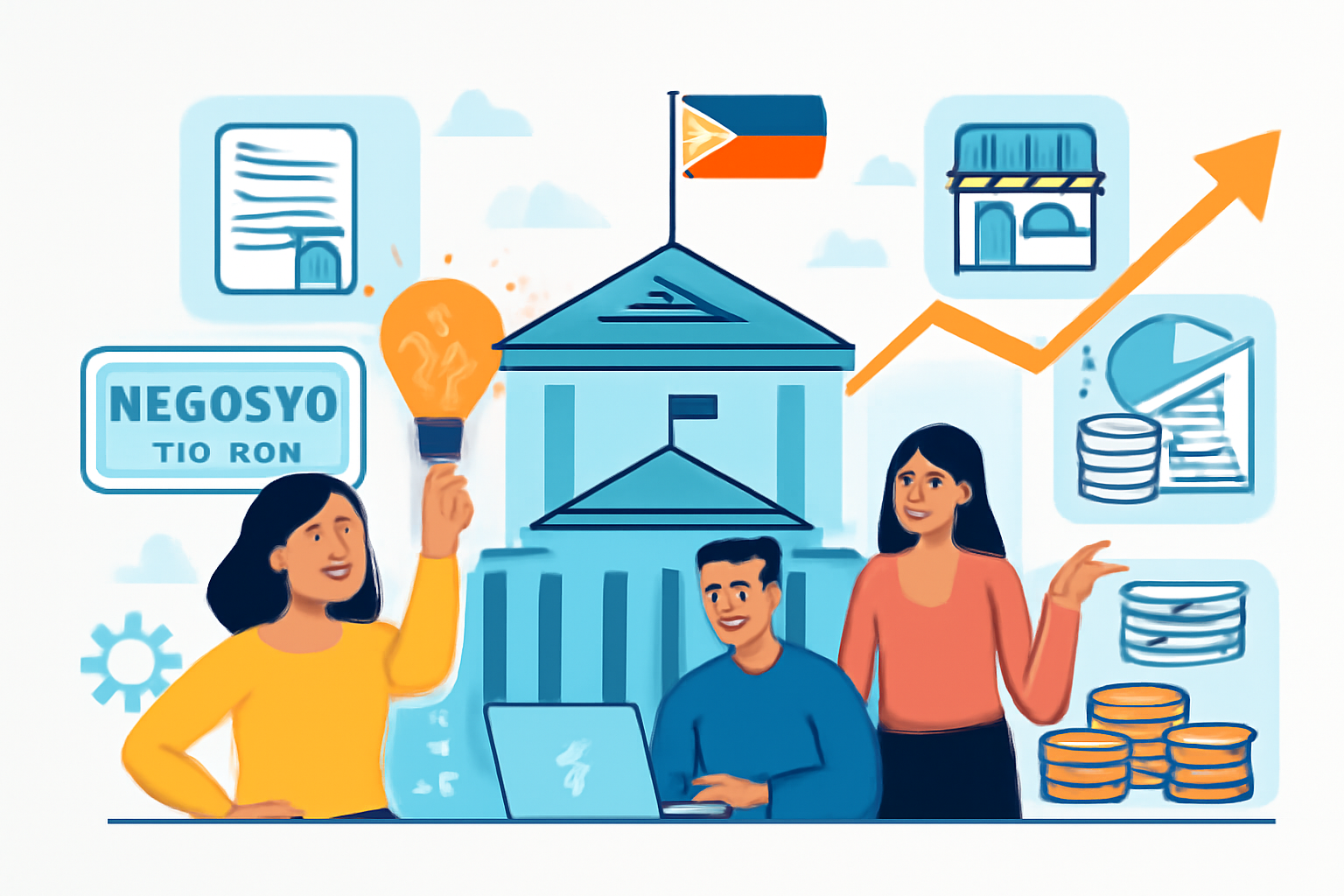
The government has also introduced initiatives like the “Negosyo Centers,” which serve as one-stop shops for aspiring entrepreneurs. These centers provide a wide range of services such as business advisory, financing assistance, and mentoring, which help businesses at various stages of development. These efforts are designed to reduce barriers to entrepreneurship, particularly for small businesses, by offering guidance and resources that may otherwise be difficult to access.
In terms of financial support, the Philippine government has partnered with various banks and financial institutions to provide loans and grants to SMEs. For instance, the Small Business Corporation (SBCorp), an attached agency of the DTI, offers financial programs designed to assist micro and small businesses in accessing credit facilities. The government has also rolled out interest-free loans and subsidy programs to help SMEs recover from the economic challenges brought about by natural disasters and the COVID-19 pandemic.
Furthermore, the government’s policies on taxation have also been favorable for SMEs. The Tax Reform for Acceleration and Inclusion (TRAIN) Law, passed in 2017, introduced tax incentives for small businesses, such as lower tax rates and exemptions from certain taxes. These measures are aimed at easing the financial burden on entrepreneurs, enabling them to reinvest their savings into growing their businesses.
In summary, the Philippine government’s support for entrepreneurs and SMEs is comprehensive, addressing various aspects such as financial aid, regulatory simplification, and business development services. Through these initiatives, the government is working to strengthen the SME sector, which is crucial for the country’s economic development.