

The 180-Language Problem Global AI Ignored
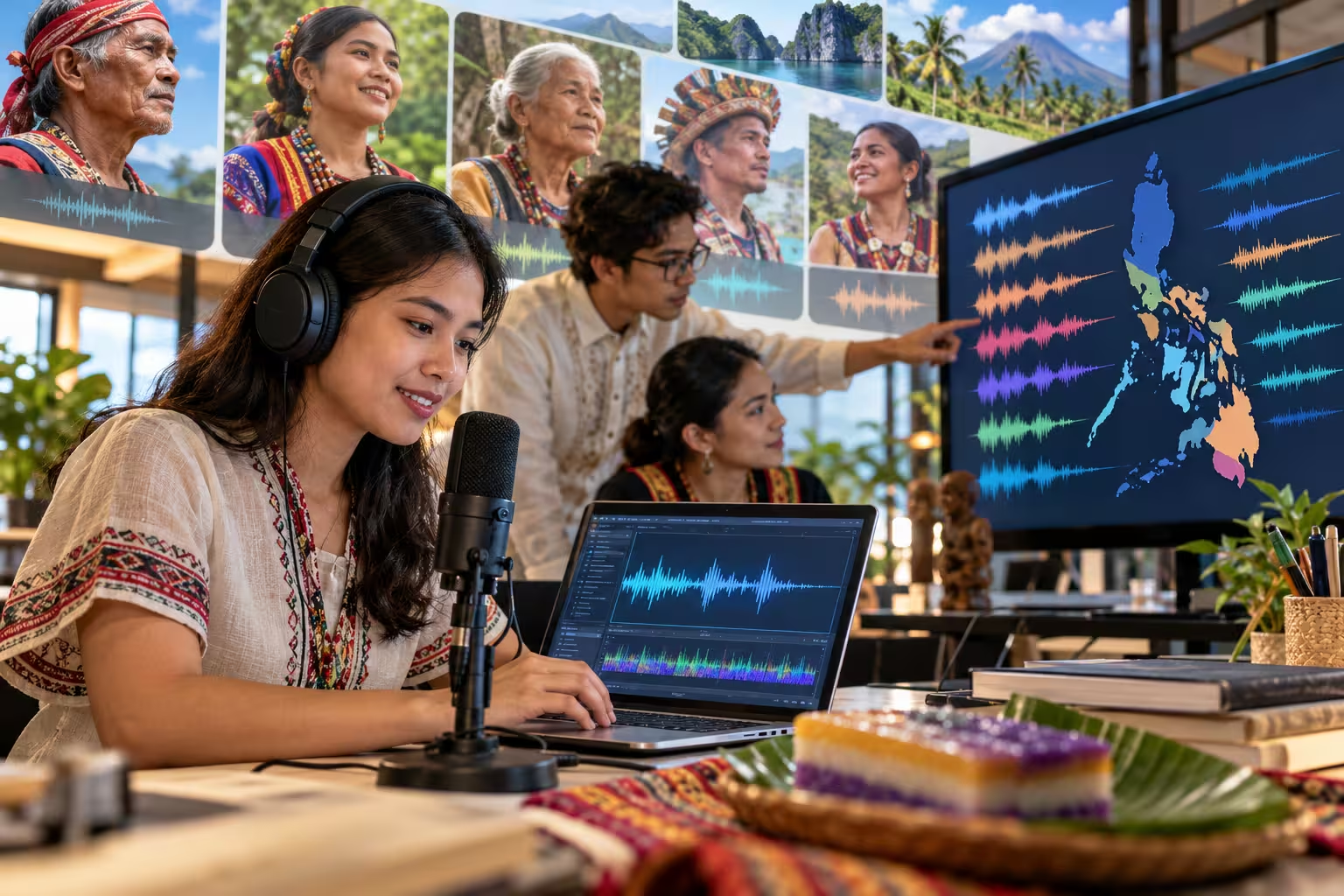
The Philippines speaks more than 180 languages, yet almost none of them are meaningfully represented in today’s AI models. That’s not a technical footnote—it’s a structural exclusion. When a Cebuano speaker asks a global chatbot a question and gets a half-baked, English-dominant response, the technology has already failed them.
Sapin-sapin AI (Sariling Ai PINas) exists to change that. Hosted on Hugging Face, the initiative builds the open foundations—data, benchmarks, and models—for Philippine-language AI. The name comes from the layered Filipino rice cake, and the metaphor is deliberate: raw archives and recordings become cleaned corpora, corpora become training sets, and training sets become models anyone can build on.
What Sapin-sapin Actually Ships
The organization’s model hub is not a press release promise. It’s live infrastructure. The halohalo-dashboard Space lets anyone transcribe, synthesize, or convert a voice in ten Philippine languages directly from a microphone or preloaded clips. The filipinospeechcorpus dataset packages the UP-DSP Filipino Speech Corpus into sentence-level 16 kHz segments ready for automatic speech recognition and text-to-speech training. The pld dataset—UP-DSP Philippine Language Dataset—contains 334,000 utterances across 448 hours and 980 speakers in ten languages.
On the text side, BantayWika aggregates Philippine literary and reference corpora in FineWeb-compatible JSONL, while halohalo provides a cleaned, deduplicated web corpus with per-language layers for Tagalog, Hiligaynon, and Bikol. This is not abstract research. It is the raw material that any Filipino startup, university lab, or government agency needs to train a model that actually understands how people speak.
Why Open Foundations Matter More Than Another Chatbot
The Philippine AI startup scene is small but focused, with most activity concentrated in NLP for Filipino languages and fintech underwriting. But without shared data infrastructure, every startup rebuilds the same corpus from scratch—an expensive, redundant race that favors whoever has the most GPU capital.
Sapin-sapin flips that dynamic. By publishing datasets under permissive terms and benchmarks that anyone can evaluate against, it lowers the barrier for smaller teams working on Waray, Kapampangan, or Pangasinan. The initiative grew out of the Philippine AI Report and has been featured in Featherless.ai‘s “No Language Forgotten” case study, signaling that the open-source approach is gaining international traction.
For investors watching the Philippine AI space, the signal is clear: the infrastructure layer is being built in public. The differentiation will come from what startups build on top of it.










Leave a Reply